Showing posts with label Greece. Show all posts
Showing posts with label Greece. Show all posts
Monday, September 07, 2009
What Can Come True
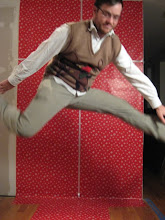
Kip made this photo of us several years ago; I found it this evening while going through a bunch of old emails. Funny--that three years later we actually would end up at the Parthenon, and would actually sit around the top of the Acropolis. Granted, not in sailor suits.


Monday, August 24, 2009
Letter from Greece, Part 10 of 10
Day Eight: Departure
We take the bus to the airport—only three Euros, compared to what would have been a fifty Euro taxi ride. There are empty rows here and there on the plane, and everyone spreads out. The flight passes pleasantly: more Woody Allen, more delicious wine “from the Olympic Airlines cellars,” whatever that means.
A few days later, I’m talking to someone who asks where I’ve been. “I was in Greece,” I tell her. “With my boyfriend.”
“That’s amazing,” she says, “What role did you play?”
For a moment, I am wondering why this person, who I don’t know that well, wants to know the specifics of my sexual proclivities. “Oh, no,” I realize, “Greece, the country. Not Grease, the musical.”
“Sorry,” she says, turning red. “But wouldn’t that have been something?”
Thursday, August 20, 2009
Letter from Greece, Part 9 of 10
Day Seven: Santorini/Athens
The morning is insanity. The airport in Santorini is small and crowded, as you would expect, with lines of passengers spilling out onto the sidewalk. Inside there are a dozen Chinese women buying refrigerated sandwiches from the small kiosk, and on the roof are tables where everyone is smoking. Although we all have assigned seats on the flight back to Athens, people crowd against the doors to the tarmac, then cram onto a lumbering bus, which rides us out to the plane itself. People rush, again, to board.
After about thirty minutes, we’ve landed in Athens, dumped into a choked mess of traffic and angry drivers—it takes almost two hours to get to our hotel. Kip and I are rattled by the speed of Athens, after having been downgraded to the lull of Santorini. We throw down our bags and walk quickly to the Archaeological Museum, only a few blocks away, and after discovering that they are open later than we previously thought, we step into a coffee bar across the street to eat bad sandwiches next to two loud smokers.
Athens needs a better museum. The artifacts here are some of the oldest, most extraordinary objects in the history of known history, they are the tiny beginnings of what we know about culture and art and democracy—at least in the West. But the building is old and badly ventilated, and at the most basic, very unpretty to look at. I think they should build a room for the Elgin Marbles, which were stolen off the Parthenon and now reside in the British Museum in London. (Here, they are called the “Parthenon Marbles,” naturally.) The Greeks should make themselves ready for their return, I think, and maybe in the new Acropolis Museum, they have.
Kip implores that we choose a contemporary restaurant for dinner, enough of these “taverna” type traditional places with all the same food over and over. I agree. We look to our guidebook for a new restaurant, something younger. Dare we hope for something gay?
Cook Coo Food is buried in a neighborhood that feels like the East Village—with rock show posters for bands called “Gods of Blood,” “Drunk Motherfuckers,” and “DeathWram”—I realize now that the neighborhood we stayed in before was more Upper East Side. The walls of the restaurant are decorated in blown-up photos of sign language letters, a hundred hands and fingers all along the walls. From the ceiling hang chandeliers that look like silver crowns spotted with fake roses—very gay. We order the tomato fritters, which the witty menu has listed as “Santorini’s favorite!!!” They are fantastic, the freshness of the tomato covered up, briefly, by the hot crunch, and then the cool touch of mint. Kip orders a roasted pork thing with feta and potatoes, and I have a vegetable coconut curry. On the walk home, we find a pastry shop with a freezer full of tiny ice cream pops—pale green, as big as your thumb, for only pennies.
That night, I have a dream about someone I went to high school with—Pearl Hwang, of all people. She and I are driving my car around some nameless town, and in the back are all these electrical cords that I know connect to some matching set of vacuum cleaners, somewhere. Then—the way things happen in dreams—they are stolen. Then the police come. And, turns out, Pearl is undercover, and she takes down some details about where I’ve been, even though she was with me in the car the whole time. In the morning, I tell Kip about the dream as he brushes his teeth.
Tuesday, August 11, 2009
Letter from Greece, Part 8 of 10
Day Six: Santorini
“We have one,” the woman says, when we inquire as to whether the rental car agency has a vehicle with automatic transmission, “and we will bring it to the hotel.” We pack bottles of water, sunscreen, sunglasses, reading materials, and bananas—which have never looked more out of place than they do in the Greek Islands. Minutes later, we’re off, headed down to the southern end of the island, to see the ruins at Akrotiri. They are closed for the year, some kind of archeological work that is too sensitive for roving tourists. So, we sit under an umbrella and stare out at the ocean. I commit a grave sin, and strike up a brief, lively friendship with one of the street dogs—everyone stares. The local bus arrives, and people pour out of it, carrying beach towels, bags, chairs. We watch them walk over the rocks, along the shore, and over the hill in the distance, to the beach.
Red Beach is so-called because of the volcanic mud that makes up the high cliffs. The beach is short, and not crowded, all tourists from around Europe. We stretch out on our towels. I plug my headphones into my ears, and crank up a Kaki King bootleg. A while later, it’s hot, and I get up go dip myself into the salty sea. The water is cold, but soon I’m comfortable, waving back to Kip on the beach. There is some kind of feathery, papery stuff in the water, maybe some kind of seaweed, and later I find my pockets filled with it. We lay there a while longer, baking, sweating, feeling good.
A pack of Australians, fifteen or so, perhaps two or three families, come walking down the beach, headed back to the parking area. Among them, is a shirtless young man, maybe twenty or twenty-one years old, barefoot, the hair on his arms and head bleached by the long hours in the sun. He finds something interesting in the cliffs above me, and standing only about six feet away, pulls his camera out of his pocket to take a picture. He lifts his arms up, stretching the full length of his body upward, the slope of his hipbone slips out of the top of his wet shorts, the patch of hair in his armpits darker, a tuft of fur dipping down from his navel, disappearing into his waistband. For a moment I’m dizzy, lost in the body of this gorgeous, splendid creature.
We drive through the winding roads of the island, never quite getting lost as much as re-thinking the route—you can basically see every in every direction at any time, so the map quickly becomes unnecessary. At Kamari, we eat lunch, peeking into more souvenir shops, watching couples cuddling each other on the beach. Then we drive the full length of the island, along a stretch of slightly treacherous-feeling road, to the northern tip, to the town of Oia. There, we park, take pictures, stroll down the walkways. I decide that my parents should take a vacation here, and pick out the hotel I think I’ll make them choose.
A few weeks prior, my friend Josh told me that we had to eat and stay at the Windmills in Oia. “It was one of the most romantic places I’ve ever been,” he said. He implored me, begged me to go, with a kind of serious desperation, holding onto me when he said it. I felt charged with whatever had happened to him there, whatever deep and meaningful things he encountered, as if my ability to re-create those same encounters was crucial to confirming that Josh’s experience had been real.
We didn’t find them, and I haven’t told him.
Sunday, August 02, 2009
Letter from Greece, Part 7 of 10
Day Five: Santorini
After filling ourselves with the hotel’s breakfast, we walk up to the old capital city of Thira, through all the tiny alleyways and staircases. We look through every store, selling every kind of plastic, ceramic and glass crap they were selling back in Athens, plus millions of Euros in very nice jewelry—Gold Street is the main drag. Something about seeing the same trinkets over and over makes you want to buy them; you start to think you’re missing out. For hours we walk, sipping fizzy drinks with labels we can’t read, eating sticky bricks of baklava, and, as Kip says, “other shapes of baklava.”
We amble down the long, donkey shit-covered walkway to the base of the caldera, and the ocean’s edge. Donkeys are a popular, if sort of novel, way to get to the city from the base of the island, which is a very steep climb of about 220 meters—and their dry, stinky droppings are everywhere along the stairway. A Carnival Cruise boat is anchored in the distance, and there is a skirted table where two men are handing out hot towels and tiny cups of water to the fat ladies waiting to get back on the boat. This strikes me as such a fake way of traveling.
The cable car whizzes us back up to Thira, and we continue walking. The view is exactly what we imagined when we had planned this vacation weeks prior. We stop at a small café and order glasses of local wine, which is served, according to the menu, with “an assortment of Greek delicacies.” The delicacies are: two cherry tomatoes cut in half to make four pieces, four olives, and four slices of Persian cucumber—a feast! The wine is fabulous, and we order more, becoming rather drunk, and making confessions about our past—freed by distance, perhaps. The waiter has a question mark tattooed behind his ear, using a small brown mole as the dot.
Finally, we walk back to the hotel to bathe and change clothes. Then we end up somewhere in Thira at the Volcano Restaurant, where the waiter demands that we eat their signature dish “Lamb Volcano,” which is pungent with garlic, onions, and dill, served with some kind of shredded cheese in a clay pot—delicious. Then we eat more tomatoes stuffed with rice, raisins and pine nuts. Then I eat a huge plate of squid. Later, we walk back through town sucking down scoops of chocolate gelato.
Saturday, July 25, 2009
Letter from Greece, Part 6 of 10
Day Four: Santorini
The “ferry” is actually a huge cruise-ship style boat, carrying about 1,800 people from Athens to Santorini, making interim stops at Paros, Naxos and Ios. Imagine that you’re in a small airport, and every flight has been cancelled due to weather. Everyone spreads out, taking up every corner, every aisle and walkway. They have planned to be immobile for the eight-hour trip, and so every table on every deck is full—card players, smokers, drinkers, elaborate board games and stacks of worn paperbacks. A few laptops drink from the scarce electrical outlets. Some passengers wander up and down the boat, holding their cords and plugs out in front of them, forlorn and wishful, like beggars.
But we have sprung for a first-class cabin—it is perhaps the best money I have ever spent. About an hour after we board—after coffee in the lounge, and the waiter’s light scoffing at me drinking Coca-Cola at 7am—we figure out how to get into room 702, which has two tiny beds, along with its own shower and toilet.
We lay down and I fall, miraculously, asleep.
Periodically, the ship’s crew makes strange, squawky announcements, which emerge from a tiny speaker on the nightstand. Out the window is ocean as far as you can see, then a dark line, then sky.
We arrive at Santorini’s new port, maybe two hundred of us, everyone looking for a taxi, a rental car, a scooter, some even hire donkeys. After a bit of confusion about which car we should get into, we end up squished against some gay guys from…Germany? The Netherlands?…who I decide must be deaf and on their first date—they are full of hand gestures and awkward pauses. Thankfully, we arrive at our hotel first, the El Greco. They put us in room 314, which looks out over the pool on one side, and over the caldera on the other. We open the windows and the breeze blows through the room. It’s so remarkable, and simple, that I use my little camera to take a movie of the billowing curtain—which I later post on Facebook, to the “like” of nine friends. (Logging in from Greece changes my preferred language to Greek, and I start getting emails that say things like: Stephanie Hughes σχολίασε την κατάσταση σας.) We lie on the bed and talk about food, about whether we should venture to the beach today or tomorrow, whether we should get in the pool before or after we walk into town, whether we should order in. We discuss options like we’ve won the lottery.
Santorini, aside from the views, is famous for a dish called Domatokeftethes, which is a tomato fritter seasoned with mint, and for the local fava beans. What makes the fava beans taste so great is the dry, volcanic soil, which—apparently—concentrates the flavor. The restaurant we choose for dinner doesn’t have the fava on the menu, and the tomato fritters arrive soggy and rather tasteless. The trouble with eating in tourist towns, of course, is that you have no idea whether any particular restaurant has any particular reputation. However, the rest of the meal is lovely, and, as it turns out, the soil makes for deliciously complicated white wine—bright, sunny and dry. The artichoke stew is homey and filling, but the grilled pita brushed with olive oil and dill, on that breezy evening on the rooftop restaurant, looking out over the caldera to the West, is the best thing we put in our mouths.
We eat dessert in bed, watching “Greece’s Got Talent,” which is a clone of the American show of similar name. For the most part, at least according to the contestants on this particular episode, the Greeks do not have talent. The act that gets the most applause is an old man who manages to stand on his head on top of a rickety chair. Then, an older gay man, like pudgy Paul Lynde, sings a traditional Greek song. The judges are a goateed man with no discernable sense of humor, a model/actress/princess (?) who changes outfits during every commercial break, and whose hair is an elaborate spray of stiff, shiny black, and the last, another singer/entertainer type, dressed in a light suit with a huge turquoise pocket square, who looks like a less-butch Elizabeth Ashley.
The first night in Santorini, I spend three hours awake, level 3 out of 10—not sleeping, but without anxiety. For a while, I watch the tiny green blinking light on the fixture in the ceiling. Insomniacs, like me, who just lay there—instead of getting up to do something, thus compounding layers of worry on top of a kind of eerie displacement of time—have the opportunity to be conscious with their unconscious bedmates for long periods, listening to their breathing, their murmurings and ramblings.
Jason was a serious sleeper, shutting the world out entirely, motionless, his body becoming heavy and immovable in the night—quite the opposite of his bright, energetic waking self. We slept in the loft bed of his 29th Street apartment, with books stuffed in between the mattress and the bed frame, as if one needed fifty choices at arms length.
Andrea was a sleep talker. She washed her hands at night, holding them above her in the air, rubbing her elbows, and waving conjured cobwebs away from her shoulders. “Did you find the bodies?” she once asked, to no one in particular. “Thank you, Mr. Peterson,” she said, “Add them to the list.”
Mario slept quietly, soundly. He had trouble getting out of bed in the morning. His alarm clock was the CD player, and every morning, for months, out of the speakers came first the Jill Scott record, then the Dixie Chicks record. I listened to those songs over and over, holding his hand in mine under the pillow, wondering if he had any plans to get up.
Meg never used a pillow, and took up little space in the bed. Not only was she a small person, but her movements were always was focused, contained, and she slept the same way. Resting her hands behind her head, or along her sides, always on her back. Even in sleep she was conserving energy.
Kip twitches. He snores. He has nightmares that he either rarely remembers, or rarely shares with me. His body is always relaxing one more muscle at a time, sinking into sleep. Sometimes I lay there imagining elaborate devices to hold open the throat, thinking that if I just had a curved piece of plastic or something, if only I had a tube of some kind, a way to sleep hanging face down, somehow—your mind does strange things in the small hours. He snores into the pillow corner, into the cats’ faces, into my ear as he holds me.
In the morning, I look up the side effects of insomnia: drowsiness, increase in stress or anxiety, headaches, problems with digestion, physical impairment, mental impairment, heart disease, memory loss, weight gain, depression, reduced self-esteem, premature death.
Monday, July 13, 2009
Letter from Greece, Part 5 of 10
Two Weeks Later: New York City
Convinced that I have missed something about the Parthenon, curious about the uncertainty that nicks at me from somewhere, I watch the episode of NOVA in which they explore the building’s restoration. I’m sure that if I just get it, something about my experience there will retroactively change. In the NOVA episode, the architects, artists, historians and scientists, they’re all talking about the building’s beauty, its perfection, the feats of mind-boggling skill, effort, and organization that it took to build something to majestic, so long ago, on such a remarkable scale. But it’s all cold, removed and distant. I’m sure the scholars who have devoted their entire lives to immersing themselves in the lives of the ancient culture, I’m sure they have some sense of life contained in the stone.
But where is it?
I spoke with a friend before I left. “Athens is a shithole,” he said, “You get up there on top of the Acropolis and there’s all this beautiful marble and its just brown and getting eaten up by the smog and acid rain, and you look out over the city and its just disgusting.”
I hate that the exhaust made by the machines of modern man are destroying the beautiful marble. I hate that history, and memory, and the glut of tourism has revised and rewritten everything to the point of the lowest common denominator. But most of all, I hate that I stood there, on the edge of the Propylaia, trying to feel the life-force, trying to cull the ghosts right out of the stone, holding my hand against the cool surface, and I came up with nothing.
Wednesday, July 08, 2009
Letter from Greece, Part 4 of 10
Day Two: Athens
By accident, we sleep until two o’clock in the afternoon. I wake up once or twice in the night, my usual amount of insomnia, currently stuck on level five out of ten. I don’t check the clock, for fear that it might be earlier than I can bear. Every time I turn over, fussing with the pillows, I worry that it might be three, four, five in the morning, and I will have to lay there, bored and anxious until a reasonable waking hour. It never occurs to me that it could be noon.
At the same corner coffee shop we buy “Greek salad sandwiches” from the same blonde woman. Is she the owner? The waiter? The fill-in? She seems not to recognize us, and I wonder if perhaps we look like every other set of American tourists that stroll through to buy a cup of coffee, or drink a beer and smoke a cigarette. Something about her seems so shy, and she seems to understand so little, despite all the hand-written signs in English, that even my rudimentary (or just rude?) pointing is met with a stare. But she takes our money, wraps the sandwiches in wax paper, and smiles. “Enjoy,” she says, and then I wonder if I’ve misunderstood the entire interaction. The sandwich is a floury baguette with olives, feta and tomato. It makes a perfect breakfast.
Clearly, the architects and designers involved in building the Parthenon wanted the reveal to be a spectacular event. You hike through the scrubby trees and brush along the pathways up the west side of the Acropolis, emerge from the narrow width of the dramatic Propylaia, to find the Parthenon set back in three-quarter view. Imagine the structure untarnished, elaborately colored, incredibly rich—most importantly, complete. Stories of wars and celebrations were depicted in sculptures along the roofline, some life-size, in stunning detail. For the Greek people, the visit must have been a deeply satisfying, transformative experience.
All around the Parthenon there are huge chunks of marble, as if the entire structure had exploded—at one point it did, under the Ottomans, who were using it as a gunpowder magazine. The area looks like my five year-old nephew’s playroom, building blocks in every configuration of stacked, toppled, and forgotten. There is new marble waiting to be matched and assembled as part of the current restoration efforts, and there is ancient marble—all of it from the famous quarry at Mount Pentelikos—cracked and worn by 2,500 years of wind, rain, pollution, fire, earthquakes, canons, restless infantry, the Christians, the Muslims, the Turks, the Venetians, and the British. Finally, the 20th Century American and Italian tourists wearing high heels are carving divots into the walkways.
On the southern slope of the Acropolis, there is the Odeon of Herodes Atticus, which is still in modern use, seating about 5,000. “Memorable performances,” according to some on-site literature, include the return of Nana Mouskouri after a two-decade absence, and Yanni’s “landmark” 1993 performance. During our visit, the stage is being prepped for a production of Aida, with huge Egyptian obelisks being moved through a deep red proscenium.
Everywhere there are structures, and the remains of structures. There is the Theatre of Dionysus Eleuthereus, the Sanctuary of Asclepius, the Odeum of Pericles, the Temple of Athena Nike, the Stoa of Eumene—all bearing the enormous crushing weight of layers and layers of history, revised and repaired, rethought and repurposed. We hear this story over and over again in Greece—the Romans replacing the marble or stealing the marble, the Christians dedicating the Parthenon to the Virgin Mary, the Greeks themselves moving statues and buildings, the frescoes buried underground during the war, more fakes on display. I keep wondering what remains of a culture that has re-imagined itself for more than 2,000 years.
On the northern side of the Acropolis, there is the Erechtheum, with its striking Porch of the Caryatids: six women, draped in fabric, holding up the roof with their heads. Some of the original statues are displayed in—so I’m told—helium-filled glass cases, in the not-yet-open-to-the-public Acropolis Museum; the ones on the actual Acropolis are replicas. Lord Elgin, perhaps the most famous looter of Greek artwork, had one of the original Caryatids removed and later displayed at his sprawling estate. At night, they say you can hear the statues crying out, wailing for their missing sister.
But we don’t hear any crying.
Do the replicas cry out? Or the originals, now drowning in helium? I try to get a sense of how the ancient mythology might interact with daily life today—but no one wants to talk about that. They only want to talk about how polytheism is crazy, about what the ancients did and didn’t do on the most basic behavioral level, nothing about what it meant to them, how it felt to be them. Tourism, or maybe plain old capitalism, has co-opted the culture, dimmed it, and arguably destroyed it. Contemporary Greece seems to say, about the past, only: “Here, buy this plastic toy Parthenon for two Euros.” When I visit the Lincoln Memorial—a structure that owes so much to the Parthenon in look and feel and use—I get a small sense of a living idea at work, a striving. In Athens, I can’t figure out why everything around me feels dead.
For dinner, we end up at Estia, a lively modern café in the heart of the Plaka, the oldest neighborhood in Athens, full of restaurants and souvenir shops. I try to order the local sheep cheese, which, as the menu states, comes with honey and sesame seeds. The waiter promises that we won’t like it, and bullies us into the saganaki: fried cheese, not a horrible choice. We eat more grilled lamb, a delicious mousaka, various dips and garlicky things, and finally end with a warm chunk of walnut pie, and shots of cinnamon schnapps.
Across from our table is the entrance to an open-air movie theater, on the roof of what appears to be an art gallery. There is one 11:15pm showing of the Ron Howard-directed “Angels & Demons,” which, in Greece, has been renamed “Something something something Illuminati.” The movie is horrendously bad, a grotesque insult to the intelligence of the audience. (Or maybe I am mistaking the film’s audience.) At one point, Ewan McGregor flies a helicopter straight up into the night, above the Vatican, so that when the anti-matter explodes it doesn’t kill everyone—no, really. It was a marvelous experience: a rooftop in Athens, the glowing Parthenon set back on the hill, the cooling night air, street cats slinking through the holes in the fence, cold beer.
Back at the hotel, we watch an episode of “America’s Next Top Model,” with sections dubbed into Greek, and CNN, with Anderson Cooper interviewing Ani Difranco about her visit to Myanmar. There are advertisements for cream-filled croissants in various flavors, which are made, it seems, by cartoon bumble bees with giant eyes. There is “Scandal” brand ice cream in square boxes that old ladies eat with wooden spoons. There are 6:00am morning shows with goofy hosts, dressed ready for a nightclub. There are cheap exercise machines sold along side cellulite creams, with manicured hands massaging thick, pasty thighs. Then there is Jessica Alba selling some kind of watch, or was it just a piece of jewelry? This, I think—advertising—is the language that I will never understand.
When I’m awake at 4:40am—insomnia on 6 out of 10—I wonder if maybe it’s the jetlag, just my confused internal clock. William Gibson wrote that jetlag was the slow-moving soul trying to catch up to the body, which had crossed the globe at higher speeds. This sounds about right. I entertain myself by trying to remember each item in the minibar from left to right: milk chocolate Toblerone, that purple-wrapped candy bar with the white goop inside, two cans of Coca-Cola, one can of Coke Light, one box of orange juice, one bottle white wine, one bottle champagne. The door is filled with tiny bottles of liquor, amber and clear and one that looks like pale blue antifreeze. There seemed to be one more thing. What was it?
Friday, July 03, 2009
Letter from Greece, Part 3 of 10
Day One: Arrival in Athens
Airplanes always look like fish to me, swimming themselves up to the gates, vomiting out beleaguered passengers, hundreds of Jonahs with rolling suitcases. There should be a better way to arrive in a new place—one airport gate looks like the next, no matter where you are in the world, the same refrigerated air, the same shiny bottles of liquor for sale at duty-free shops, the same gaudy perfume, boxes and boxes of cigarettes. There should be a way to shrink the distance between the traveling self and the experience. Couldn’t we arrive on the beach directly, without customs and baggage and bureaucracy? Couldn’t we reform—magically, molecularly—at a pre-determined rooftop happy hour? Outside the airport, through the layers of tinted glass, is the bright, empty sky.
Here’s how you hail a taxi in Athens: You stand on the street corner, and when a yellow cab pulls up slowly near you, not exactly stopping, you yell your destination out at them, as loud as possible, into their open window. Except that I don’t know this at the time. So, Kip and I are sitting in the back of the cab, dizzy on no sleep and warm air, and suddenly, Greek women in their work get-ups are screaming into our window. Larisis! Syntagma! It’s like that perfume commercial, with all the models bursting through the French doors to their balconies—Egoiste! I wonder: Are the citizens of Athens welcoming us? Are they hurling abuse? Why are the drivers pulling away so quickly, not even responding? If they can’t get a taxi to stop, how are we going to? I later learn that the taxis will generally pick up other riders, if you’re both going in the same direction. Thus the slowing down, the speeding away. This would never work in New York. Can you imagine if suddenly you were veering toward 1st Avenue because someone else got into the cab?
The Divani Palace Hotel is modern, clean and unhurried. The woman at the desk wears bright purple eye shadow, and lipstick in a darker shade of the same color. She installs us in a tidy, fifth floor room with a balcony that overlooks the pool, and has a splendid, unobstructed view of the Acropolis. Finally, despite what everyone says you should do to combat jetlag, after being awake for almost thirty hours, with all the lights on, I sleep.
A few hours later, we walk through the neighborhood. Everywhere are the trinkets and tchotchkes of tourism: tiny Parthenons, tiny statues of Athena, reproductions of vases and amphorae in every color, in terrible and wonderful colors, the white and blue trademark of the islands in shirts, hats, coffee mugs, ashtrays, toothpick holders, shot glasses, Zeus playing cards, Athena notepads, Apollo serving dishes. Postcards and postcards and postcards, aisles of them, like a library.
We land in a tiny corner coffee shop, eating flaky dandelion and feta pastries—rich, fatty and sharp. The street dogs lay wherever they can find shade, looking dead. A German woman sits at the table next to us. “I am café,” she says to the waitress, pantomiming a tiny cup of espresso.
We return to the hotel, and another nap follows. The air conditioning is turned up too high in the room, and after an hour, I slide open the doors to the balcony, to let in some warmth, some light. We get up, wander through the blocks again, and take the tiny elevator to the roof of an apartment building, for dinner at Attikus Restaurant. We eat tzatziki, tomatoes and peppers stuffed with rice and pine nuts, lamb meatballs in a spicy tomato sauce, saganaki, more lamb, this time stewed with lemon and potatoes. We order a bottle of Retsina, piney and green, and I get the feeling that the servers there wouldn’t dare drink it—but I like it. We talk and laugh, a bit drunk, overfed. The olives, dark spots on every plate, are spectacular. The Parthenon is perched on the rocky hilltop behind me, golden light shining out from the inside, white spotlights hitting the columns. We take a few pictures as the sky fades from blue to darker, until the waiter brings candles to our table.
Saturday, June 27, 2009
Letter from Greece, Part 2 of 10
Day One: Departure, New York City
The outbound flight is overnight, just over eight hours—we will arrive at about nine o’clock in the morning. I take one Ambien before the dinner service. I’ve loaded my iPod with Woody Allen movies, and I stuff Vestal McIntyre’s new novel down into the seat pocket in front of me, plus three New Yorkers that I’ve let pile up. Kip gathers the small pillows and the blue and yellow blanket sealed in a plastic bag, and fixes himself against the window, soon asleep. The in-flight television has nine channels, each with a series of Greek television shows, or cheap copies of popular game shows, all of them seem to feature graying male singers, in tuxedos with slick-looking hair—Frank Sinatra meets Zorba the Greek crossed with Barry Manilow. The women in the TV audience are going wild. I can’t tell if the performances are from this year, or from thirty years ago. Old guys like this could never be pop stars in America.
Sleep never comes.
But I’m used to that.
I read, I watch the movies on the iPod, I stare into the blank screen. Hours pass. I drink a tiny, airplane food-sized bottle of red wine, remarkably good—I consider waking Kip so he can taste it. The man sitting in front of me has bad circulation, or restless leg syndrome, or unassailable boredom, and he takes to standing in the aisle for long periods of time, checking his pockets obsessively. For something he brought? For something he forgot? On the screen at the front of the cabin there’s a map of the world, shifting from far away to closer distances, following our tiny tin tube as it crosses the Atlantic, over the northern border of Spain, over the heel of Italy, and eventually to Athens.
Sunday, June 21, 2009
Letter from Greece, Part 1 of 10
This travelogue from my trip to Greece is not structured chronologically. So this, Day Three, is actually the beginning. I'll post the rest of the parts in the coming weeks.
Day Three: Temple of Poseidon, Cape Sounion
The American woman stands near the southwest corner of the temple, waiting for her husband to steady the video camera. She is blonde—dyed and teased into a helmet—big shiny nails, maybe seventy, probably retired, probably used to taking these sorts of vacations, where you ride a big modern bus through old, crumbling towns in Europe. “This is the place where, uh, honey, what is it called?” She clears her throat. Her husband is wearing a loose Hawaiian-print shirt, and white socks pulled up to his knees. “The Temple of Poseidon,” he says, loudly. “Right, okay, I’m ready.” she says. He pans the camera behind her, over the gleaming white columns, across the base of the temple, and back.
She begins: “Here we are at the Temple of Poseidon. The ancient Greeks would come here to worship him, and to honor him, and to make sacrifices of lambs or other animals, maybe burn something and send the smoke into the air, whatever else they wanted to do.” “But never as tourists,” she continues, “the ancients only came for worship. Oh, and this, where we are, is the southernmost point of mainland Europe.” These are all things the tour guide told us.
The wide Aegean spreads out behind me, dark, turning in the distance to a thin grey haze which blurs the details of the islands, the waves, the horizon, cut by thin trails left from passing ships. I turn back, still listening, watching the Italian tourists take pictures in pairs and foursomes, changing groupings, trading cameras. “But there are no ghosts here anymore. You can feel the lack of energy, and the long history of the energy. They were here once, they were very many, but their business has finished.” A grouse standing on the corner of the temple begins its rough, guttural call. She smiles, glowing, as if candlelit from within. “Now,” she says, “they’re all gone.”
Thursday, May 21, 2009
Back!
Returned from Greece! It was a marvelous trip. Granted, the jetlag hit me really hard this time--most likely, I was also suffering from a real lack of sleep the three weeks prior. (Not, "most likely," but "actually.") One day, we slept until nearly two in the afternoon, which, if any of you know me, you know is completely unheard of.
We did not, as Laura begged us, go to an olive plantation. We did, however, eat lots and lots of fried cheese, tzatziki, and various grilled meats and other lovely items. The sad part was that, well, the Greek food in my very own neighborhood--across the street--is better. But okay, the restaurant across the street from me is an expensive, upscale Greek place, and we found those restaurants, but couldn't really afford to eat in them every night. But--you can't beat the places we ate for the atmosphere, and the view. OMG, the views. I am not complaining. I was happy with everything--when you eat at the tourist restaurant, you get tourist food. I was just so glad to be doing something else for a while.
I'm going to write up the trip, of course. One thing about my brain that I find a little annoying is how I have to process everything via writing. So, while I'm laying in the bed at 3:00am having insomnia on Santorini and starting at the tiny blinking light on the wall, I have to think about what I might write about the tiny blinking light. I can't ever turn it off. Last night, at my grocery store, I walked past the Greek aisle and had a weirdo freak-out moment. Where am I? It was all again unfamiliar, and yet familiar. Having had that alphabet, those shapes, all around me for so long--and then here I was back in my real life, and there they were again. There's an image, I thought. (This reminds me of what I always tell people about writing, that having ideas is not the problem.)
Bless being on vacation. Bless being home.
Subscribe to:
Posts (Atom)