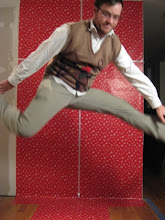
Becky tells me in an email that I should stop trying to figure out what's going on. "Quit trying to give yourself an explanation," she writes. But I'm not sure (for better or for worse) if I know how to not try to figure things out. That's what I do. It's how I process. In fact, I find it difficult to imagine anyone going through the world and not trying to figure it out.
And in an incredibly appropriate art-meets-life/art-is-life kind of twist, I'm trying to finish this novel, Yield, which I've been writing here and there for the last oh, what, five years? In Yield I've been exploring the idea of resistance to progress, resistance to life changes, it's the resistance that causes the stress. How like a filament in a light bulb, it's the resistance that causes the tiny thread of metal to glow. And I just thought it bizarre, and also one of the wonderful things about making art and writing novels, that I am teaching the same lesson to my narrator that I'm trying to learn in life.
Saturday, October 29, 2005

Friday, October 28, 2005
Captain Sulu Comes Out
Another story which appeared (sort of) all over the news today was that of the coming out of actor George Takei, perhaps best known as Capt. Sulu on the long-running hit series "Star Trek." Takei received a star on the Walk of Fame in 1986, and wrote a well-reviewed autobiography in 1994 called To the Stars.
I offer three punchlines:
1) ...to boldly go where no man has gone before...
2) Is that a taser in your pocket, Mr. Sulu?
3) Mr. Sulu, all ships to dock at Uranus.
I offer three punchlines:
1) ...to boldly go where no man has gone before...
2) Is that a taser in your pocket, Mr. Sulu?
3) Mr. Sulu, all ships to dock at Uranus.
What I Need
I've taken up with the "What I Need" bandwagon. Google (or Blingo) your first name along with 'needs,' all in quotes, and allow the Wonders of the Web to tell you what you need:
Lee needs a fresh challenge
Lee needs Love
Lee needs a decent nickname
Lee needs hundreds of thousands of dollars to defend himself
Lee needs to be blue not black
Lee needs to muster the political courage and vision to tackle these issues
Lee needs to hear the truth
Lee needs matches
Lee needs to be created
Lee needs rest
What do you need?
Lee needs a fresh challenge
Lee needs Love
Lee needs a decent nickname
Lee needs hundreds of thousands of dollars to defend himself
Lee needs to be blue not black
Lee needs to muster the political courage and vision to tackle these issues
Lee needs to hear the truth
Lee needs matches
Lee needs to be created
Lee needs rest
What do you need?
Wednesday, October 26, 2005
1000 Paper Cranes
A group of people in Northampton are gathering together to make 1000 origami cranes for Rafael Sevilla, the 24 year-old armored truck driver who killed Meg on September 22. In Japan, it is believed that if you fold 1000 cranes for someone who is ill, they will get better. According to the police, Rafael was hospitalized for "some time," while other reports have said up to two weeks. It is the hope of these friends, the community there, that with the gift of these 1000 paper cranes, Rafael can come to some kind of peace with what happened.
I'm glad to see that someone is reaching out to him--I've had the impetus myself on occasion, though I doubt I would ever pursue it. I wonder what that might be like for him, to open a box full of intricatly folded paper, symbols of peace, wellness and hope. I wonder whether it will be a relief, or another burden.
At the other end of things are the ways in which strangers take up someone's death for their own purposes. I came across a blog the other day--a new habit of mine is Googling Meg, searching for mentions here and there--in which the particpants spoke of her as if she had simply been a casualty of the ways in which bike riders are maligned in our society. Perhaps they are--indeed the are--but the vitriol was unsettling. About Rafael, a person unknown to him, someone wrote: "needless to say, he ended up being late for his cash pickup anyway." Other people said: "Some of those truckers are so irresponsible, this one's been such an A-hole, murderer!!!" and "I hope the driver not only loses his job but gets thrown in jail for a long, long time as well," and: "money really IS the root of all evil..."
I have always said that I feel worse for Rafael than I ever will for me, or for any of us who were close to Meg. Because we got to have her. She loved us; we loved her. She was part of our lives rather than just a path that intersected it. So, needless to say I, for one, do not think he should be thrown in jail for a long, long time; I do not think he was particularly irresponsible. And I do not think he is an asshole murderer. The place where the accident happened is on a slope uphill. This means that after she was hit, Rafael had to sit inside the truck, holding his foot on the break so as to not let it roll back. The policemen said that when they arrived to place blocks behind the wheels Rafael was extremely distraught and had sweat completely through his clothes.
Those of us who occupied those inner electron shells around Meg's life have not exactly been avoiding each other, but we haven't spent a lot of time talking either. Some letters have been exchanged, a few phone calls here and there, but we are naturally existing mostly in our own circles once again. Instead, I send love and laughter in coded messages into the air, set aloft like falcons, in hopes that they return.
I'm glad to see that someone is reaching out to him--I've had the impetus myself on occasion, though I doubt I would ever pursue it. I wonder what that might be like for him, to open a box full of intricatly folded paper, symbols of peace, wellness and hope. I wonder whether it will be a relief, or another burden.
At the other end of things are the ways in which strangers take up someone's death for their own purposes. I came across a blog the other day--a new habit of mine is Googling Meg, searching for mentions here and there--in which the particpants spoke of her as if she had simply been a casualty of the ways in which bike riders are maligned in our society. Perhaps they are--indeed the are--but the vitriol was unsettling. About Rafael, a person unknown to him, someone wrote: "needless to say, he ended up being late for his cash pickup anyway." Other people said: "Some of those truckers are so irresponsible, this one's been such an A-hole, murderer!!!" and "I hope the driver not only loses his job but gets thrown in jail for a long, long time as well," and: "money really IS the root of all evil..."
I have always said that I feel worse for Rafael than I ever will for me, or for any of us who were close to Meg. Because we got to have her. She loved us; we loved her. She was part of our lives rather than just a path that intersected it. So, needless to say I, for one, do not think he should be thrown in jail for a long, long time; I do not think he was particularly irresponsible. And I do not think he is an asshole murderer. The place where the accident happened is on a slope uphill. This means that after she was hit, Rafael had to sit inside the truck, holding his foot on the break so as to not let it roll back. The policemen said that when they arrived to place blocks behind the wheels Rafael was extremely distraught and had sweat completely through his clothes.
Those of us who occupied those inner electron shells around Meg's life have not exactly been avoiding each other, but we haven't spent a lot of time talking either. Some letters have been exchanged, a few phone calls here and there, but we are naturally existing mostly in our own circles once again. Instead, I send love and laughter in coded messages into the air, set aloft like falcons, in hopes that they return.
Monday, October 24, 2005
Excerpts in Limbo Series, Vol. 1
Daniel sat in the dark, his thighs hot from the laptop, his face bathed in a glowing blue wash. The light from the screen shone out into the room, the plants stretched into indigo-hued shadows, the vases looked rimmed with a shiny sapphire lining. Lucy retired to her guest room; Helena turned in right after dinner. Even Baroness, after spending an hour curled up on the floor, went to sleep with her mother, where she stretched out on the end of her bed.
Danny was left with the elaborate witticisms found in Internet personal ads, bloated with the enormous crush of irony and the horrors of modernity pushed to their extreme: disconnect, desperation, isolation. Everybody competing for companionship, buried in word games, completely devoid of the flesh and the elegant exchange of molecules. Daniel imagined thousands of people across the globe, hundreds of thousands maybe, all clicking away, listing preferences and statistics, uploading doctored photos. Fudge a little here and there, they’re never know. Invent the person someone wants to date. Yuck.
Nevertheless. Here he was.
Scrolling through the promises.
He filled out his own ad months earlier. What do you look for in a partner? A fair amount of distance. List some of your hobbies or interests: Watching billiards on television. Using too much conditioner. What is your idea of the perfect date? Not a lot of talking and a couple of magazines.
He wasn’t that courageous.
Instead, Daniel filled the spaces with answers that seemed (to him, at least) to be sufficiently vague. A few general cultural benchmarks, which would help readers fit him into their own structure: he wrote that he read D.H. Lawrence, which was somewhat true (he had read D.H. Lawrence, but didn’t necessarily consider himself a reader of D.H. Lawrence;) he wrote that he listened to “all kinds of music,” because people are too sensitive about music, and a list of specific bands or singers, even vague genres, could raise acres of red flags; and, finally, that he liked “independent movies with solid scripts” and occasionally enjoyed a “summertime blockbuster about saving the world while blowing things up.” He also included some random obscurity, which he suspected could be read as interesting and original: he liked ping-pong and Strawberry Charleston Chews. It was a precarious balance. So much engineering.
Danny was left with the elaborate witticisms found in Internet personal ads, bloated with the enormous crush of irony and the horrors of modernity pushed to their extreme: disconnect, desperation, isolation. Everybody competing for companionship, buried in word games, completely devoid of the flesh and the elegant exchange of molecules. Daniel imagined thousands of people across the globe, hundreds of thousands maybe, all clicking away, listing preferences and statistics, uploading doctored photos. Fudge a little here and there, they’re never know. Invent the person someone wants to date. Yuck.
Nevertheless. Here he was.
Scrolling through the promises.
He filled out his own ad months earlier. What do you look for in a partner? A fair amount of distance. List some of your hobbies or interests: Watching billiards on television. Using too much conditioner. What is your idea of the perfect date? Not a lot of talking and a couple of magazines.
He wasn’t that courageous.
Instead, Daniel filled the spaces with answers that seemed (to him, at least) to be sufficiently vague. A few general cultural benchmarks, which would help readers fit him into their own structure: he wrote that he read D.H. Lawrence, which was somewhat true (he had read D.H. Lawrence, but didn’t necessarily consider himself a reader of D.H. Lawrence;) he wrote that he listened to “all kinds of music,” because people are too sensitive about music, and a list of specific bands or singers, even vague genres, could raise acres of red flags; and, finally, that he liked “independent movies with solid scripts” and occasionally enjoyed a “summertime blockbuster about saving the world while blowing things up.” He also included some random obscurity, which he suspected could be read as interesting and original: he liked ping-pong and Strawberry Charleston Chews. It was a precarious balance. So much engineering.
Friday, October 21, 2005
Open Letters, Vol. 1
Dear Employees of Banana Republic,
Enthusiasm does not equal sincerity.
Regards,
Lee
Enthusiasm does not equal sincerity.
Regards,
Lee
Thursday, October 20, 2005
An Evening with Joan
Last night at the 92nd Street Y, Joan Didion read from her new book, The Year of Magical Thinking, and then took questions from the audience. After the introduction, in which the speaker once again spoke that most famous line from The White Album, "We tell ourselves stories in order to live," Joan walked out to the podium in a black jacket and black skirt.
She is a tiny woman--that's not a new idea; she's written about her physical appearance a lot over the years--and I thought that maybe it was hard to find clothes that fit her; the jacket seemed a bit too large, and so different from the I.Magnin get-ups her heroines (are they heroines?) so often wear. Then she opened the book and began to read.
The Year of Magical Thinking is so textbook Didion that it almost leans toward parody; the first paragraph deals with the date and time the file "notes on change.doc" was last modified on her computer. And yet, it it rings so utterly true and original, so deeply personal that it feels like a completely new genre. As if with this book she has finally proven what she always believed to be true: "...that meaning itself [is] resident in the rythms of words and sentences." Joan writes at one point about the "shallowness of sanity," about how eight months after John's death she realized that for most of that time she had been--quite literally--crazy.
I recognized that madness.
During Meg's memorial, one of the people who spoke seemed to miss the point all together--and I remember thinking that I could not wait to get home to New York so that I could call Meg and tell her what sort of ridiculousness went down in her honor. And when I was in Meg's apartment, cleaning out her drawers, parcelling out her clothing and keepsakes to people who I thought might, too, hold some meaning in objects, I thought that Meg had installed invisible video cameras in the corners, and that later, or even from a dark room behind a false door, she was watching, making notes, critiquing our behavior. I knew this was true even as I recognized the insanity of it.
When Joan was finished (she read the first 22 pages) she closed the book, said "Thank you," and walked off the stage. She returned a moment later. "I forgot the question and answer part," she said. "Sorry."
The questions, taken from notecards submitted from the audience, were mainly lukewarm: "How did you get your start in journalism?" "I backed into it," she answered. "I was working at Vogue and occasionally they needed a piece written and so I wrote it." Next question: "How is writing fiction different or similar to writing non-fiction." "It's not that different," she said. "I think people who do them both don't regard one as more important than the other." The moderator then remarked, "And I suppose there are deadlines in journalism whereas fiction is rather open-ended." Joan deadpanned, "Yeah," failed to extrapolate on that idea, left it at that, and the audience laughed. Another question: "Did publishing this book change the way you thought about grief?" he asked. Joan didn't hesitate, "Writing it changed the way I thought about it."
She talked for a moment about John toward the end. "I knew him about as well as you can know a person," she said. "But there are still some questions that I don't think I could answer for him."
There was a very long line for the booksigning, though it moved quickly. She sat behind a desk in the art gallery, now wearing a pale blue scarf wrapped around her neck, and her trademark huge glasses set to her side. Barnes & Noble was selling the new book, along with paperbacks of Where I Was From and Vintage Didion. Most people had those, but there were a few older books peeking out of purses here and there.
I slid my copies of Slouching Towards Bethlehem and Play It As It Lays across to her. "Thank you, Joan," I said. And she looked up, "Oh, and thank you," she said. She signed the first, smaller than most of my other signatures, with less force on the page. And I noticed she had her purse lying across her lap. Then she signed the second. "Thank you," I said again, and walked away.
She is a tiny woman--that's not a new idea; she's written about her physical appearance a lot over the years--and I thought that maybe it was hard to find clothes that fit her; the jacket seemed a bit too large, and so different from the I.Magnin get-ups her heroines (are they heroines?) so often wear. Then she opened the book and began to read.
The Year of Magical Thinking is so textbook Didion that it almost leans toward parody; the first paragraph deals with the date and time the file "notes on change.doc" was last modified on her computer. And yet, it it rings so utterly true and original, so deeply personal that it feels like a completely new genre. As if with this book she has finally proven what she always believed to be true: "...that meaning itself [is] resident in the rythms of words and sentences." Joan writes at one point about the "shallowness of sanity," about how eight months after John's death she realized that for most of that time she had been--quite literally--crazy.
I recognized that madness.
During Meg's memorial, one of the people who spoke seemed to miss the point all together--and I remember thinking that I could not wait to get home to New York so that I could call Meg and tell her what sort of ridiculousness went down in her honor. And when I was in Meg's apartment, cleaning out her drawers, parcelling out her clothing and keepsakes to people who I thought might, too, hold some meaning in objects, I thought that Meg had installed invisible video cameras in the corners, and that later, or even from a dark room behind a false door, she was watching, making notes, critiquing our behavior. I knew this was true even as I recognized the insanity of it.
When Joan was finished (she read the first 22 pages) she closed the book, said "Thank you," and walked off the stage. She returned a moment later. "I forgot the question and answer part," she said. "Sorry."
The questions, taken from notecards submitted from the audience, were mainly lukewarm: "How did you get your start in journalism?" "I backed into it," she answered. "I was working at Vogue and occasionally they needed a piece written and so I wrote it." Next question: "How is writing fiction different or similar to writing non-fiction." "It's not that different," she said. "I think people who do them both don't regard one as more important than the other." The moderator then remarked, "And I suppose there are deadlines in journalism whereas fiction is rather open-ended." Joan deadpanned, "Yeah," failed to extrapolate on that idea, left it at that, and the audience laughed. Another question: "Did publishing this book change the way you thought about grief?" he asked. Joan didn't hesitate, "Writing it changed the way I thought about it."
She talked for a moment about John toward the end. "I knew him about as well as you can know a person," she said. "But there are still some questions that I don't think I could answer for him."
There was a very long line for the booksigning, though it moved quickly. She sat behind a desk in the art gallery, now wearing a pale blue scarf wrapped around her neck, and her trademark huge glasses set to her side. Barnes & Noble was selling the new book, along with paperbacks of Where I Was From and Vintage Didion. Most people had those, but there were a few older books peeking out of purses here and there.
I slid my copies of Slouching Towards Bethlehem and Play It As It Lays across to her. "Thank you, Joan," I said. And she looked up, "Oh, and thank you," she said. She signed the first, smaller than most of my other signatures, with less force on the page. And I noticed she had her purse lying across her lap. Then she signed the second. "Thank you," I said again, and walked away.
Monday, October 17, 2005
Stamp Poem
If she had been a stamp, I think
she would have been the three cent,
or another such small, eccentric denomination.
She would have been
the ones you forget are made,
the ones you see rarely,
the ones you use in times of emergency,
when you are out of regular stamps,
and your letter can only be rescued by forgotten
stamps, the old kind with glue gone brown,
which you cull from the back and sides of a junk drawer,
left there maybe by your grandmother,
when she was still alive to mail you letters.
Perhaps I just want her to be a stamp,
So that someone could send her back to me.
So that I could send her back to you.
she would have been the three cent,
or another such small, eccentric denomination.
She would have been
the ones you forget are made,
the ones you see rarely,
the ones you use in times of emergency,
when you are out of regular stamps,
and your letter can only be rescued by forgotten
stamps, the old kind with glue gone brown,
which you cull from the back and sides of a junk drawer,
left there maybe by your grandmother,
when she was still alive to mail you letters.
Perhaps I just want her to be a stamp,
So that someone could send her back to me.
So that I could send her back to you.
Sunday, October 16, 2005
Conversation
I was waiting for the D train at Seventh Avenue today, trying to get downtown to meet a friend for a movie, and a man came over to where I was sitting and sat down. He was in his mid-thirties, handsome and well-dressed; he had a lot of stuff with him: a box with a handle, an expensive-looking tote, a bag with a bit of ribbon attached, as if it were a birthday gift, and a plastic Ziplock which held two sugar cookies.
"Is this going downtown?" he said, pointing to the empty track in front of us. "Or here?" He pointed to the tracks behind me.
"They're both going downtown. Where are you trying to go?"
He let his bags fall around his feet. "I'm trying to get to the World Trade Center."
"E Train," I said, "This one here." I showed him, gesturing to the sign above us which showed the big blue circle. I returned to my book.
"That's a good color on you," he said. I was wearing a dark brown cashmere sweater, probably my favorite. "What I mean is, that's a good color on you." The same words here were meant to clarify something, though I was unsure what. "I'm a make-up artist, that's why I noticed. I'm also an image consultant."
"Oh," I said, not looking at him too much, still focused on the pages in my lap, trying to disappear from the world.
"I've just been at the Hilton for hours. There was an auction. A charity for children." He continued talking, and I wasn't sure if he was trying to make conversation, or pick me up, or if he was just listening to himself talk, like practicing talking. "I was one of the items. It was weird. I mean, you could bid on me." He rubbed his eyebrows. "You could win a day of shopping and make-up consultation with me."
And I wondered, when he clutched his make-up box close to him, if perhaps he was leaving the auction unbought. He was out of order somehow, like one or two molecules out of the trillions that he was made of were slightly misaligned, and it was jarring him to the point of near-madness. "So, that was weird," he said.
I almost said to him that I knew what it was like to build yourself back up one atom at a time, holding yourself upright day after day when all you wanted to do was to fall over and sink into the earth, closing your eyes. I almost said to him that even when you expected to be tied in a straight-jacket and thrown into a padded cell because your mind had become so unhinged--even when you were begging for that straight-jacket, when you wanted it--all you can do is wait it out.
"You know, I've never done that before. So that was strange." I told him that I thought it probably was strange. He looked back at me, started to say something, re-thought. Then he said "I just want to go home."
"Is this going downtown?" he said, pointing to the empty track in front of us. "Or here?" He pointed to the tracks behind me.
"They're both going downtown. Where are you trying to go?"
He let his bags fall around his feet. "I'm trying to get to the World Trade Center."
"E Train," I said, "This one here." I showed him, gesturing to the sign above us which showed the big blue circle. I returned to my book.
"That's a good color on you," he said. I was wearing a dark brown cashmere sweater, probably my favorite. "What I mean is, that's a good color on you." The same words here were meant to clarify something, though I was unsure what. "I'm a make-up artist, that's why I noticed. I'm also an image consultant."
"Oh," I said, not looking at him too much, still focused on the pages in my lap, trying to disappear from the world.
"I've just been at the Hilton for hours. There was an auction. A charity for children." He continued talking, and I wasn't sure if he was trying to make conversation, or pick me up, or if he was just listening to himself talk, like practicing talking. "I was one of the items. It was weird. I mean, you could bid on me." He rubbed his eyebrows. "You could win a day of shopping and make-up consultation with me."
And I wondered, when he clutched his make-up box close to him, if perhaps he was leaving the auction unbought. He was out of order somehow, like one or two molecules out of the trillions that he was made of were slightly misaligned, and it was jarring him to the point of near-madness. "So, that was weird," he said.
I almost said to him that I knew what it was like to build yourself back up one atom at a time, holding yourself upright day after day when all you wanted to do was to fall over and sink into the earth, closing your eyes. I almost said to him that even when you expected to be tied in a straight-jacket and thrown into a padded cell because your mind had become so unhinged--even when you were begging for that straight-jacket, when you wanted it--all you can do is wait it out.
"You know, I've never done that before. So that was strange." I told him that I thought it probably was strange. He looked back at me, started to say something, re-thought. Then he said "I just want to go home."
Thursday, October 13, 2005
The Year of Magical Thinking
Joan's new book, The Year of Magical Thinking has been nominated for a National Book Award for non-fiction.
If you haven't read it, do; and if you're voting, vote for Joan.
If you haven't read it, do; and if you're voting, vote for Joan.
Subscribe to:
Posts (Atom)