Dear State Senators,
The votes that each of you cast yesterday should fill you with shame. When you returned to your homes in the evening, to your spouses and children and beside tables, did you feel a sense of accomplishment? Did you think that you had honored your commitment to democracy and government? Or did you wake choking in the middle of the night, grasping desperately for a glass of water, your body caught in the twisted sheets, knowing that the choice you made was the resentful, hateful, bigoted choice of a coward?
I am afraid that you slept soundly. I am afraid that you think that this is just how some things go in Albany, that votes don't mean what they really mean. I am afraid that you cannot see what you have done. I am afraid that because of your ignorance you do not understand that your votes are not simply votes to deny the rights of thousands of loving, hopeful, trusting, giving, caring and tax-paying people--many of whom voted for you--the right to happiness, and equal protection. Your votes are expressions of pure, unequivocal hate. You have said: It's okay to hate gay people.
Do you understand that heterosexual marriages are actually made less sacred by the choices that you have made? Do you understand that if the love between two women who wish to marry is a threatening advance on the stability of your marriage, then your marriage has no stability at all?
Though you may not see it, this is not simply a vote against gay people who want to share a life together. This is a vote against every gay, lesbian, bisexual, transgender or questioning child that gets bullied, beaten, assaulted and abused--on the playground, in classrooms, and in the very communities that you represent. Your vote is a vote against their future.
Of all the reasons to have the institution of marriage open to every one of this country's citizens, perhaps the most important is this: So that our gay and lesbian children feel valid. So they can grow up to be productive, loving, active members of the American idea in action. Your vote has said to them, loud and clear, that your neighborhood and your government thinks that you are worthless. That worthlessness, which is the worthlessness that you have incited, encouraged and have now perpetuated, will cause some of those children to attempt suicide. Some of those who try to kill themselves will succeed. They will shoot themselves with guns, or hang themselves in closets, or slice open their fragile young wrists.
I hope that when this happens--and sadly, terribly, regretfully, it will happen--that you are visited by their ghosts in the night. I hope that the dark room you are sleeping in turns suddenly cold. I hope your body feels icy, frozen with the knowledge of what you've done. I hope that you wake shaking, and screaming in fear.
Sincerely,
Lee Houck
Showing posts with label bullshit. Show all posts
Showing posts with label bullshit. Show all posts
Thursday, December 03, 2009

Saturday, April 18, 2009

Thursday, November 13, 2008
No on H8
It's been many years since I joined the throngs of fervent, angry, optimistic activists, carrying signs and candles, marching down Broadway in support of some cause or another. When I began taking my writing seriously--that is to say, when I began writing intentionally, for the purpose of writing--something in my perspective shifted, and I became even more of an observer. For better or for worse*, it has become increasingly impossible for me to include myself in the rants--"What do we want? Equality! When do we want it? Now!" My own thinking became separate from the We, and I always think of the protesters as They. What do they want? When do they want it?
But Prop 8 changed things. And last night, with more than 10,000 other people--from what I saw this morning, the AP reported roughly 10,000; estimates from within the crowd were at about 16,000--I marched in protest of California's decision to deny equal rights to thousands of its queer neighbors. We began outside the Mormon Temple at 65th Street--surely it was empty. Surely they were wise enough to go home early? When we first arrived on the scene, I kept thinking, Why isn't everyone spread out? Why aren't they blocking traffic? Why aren't they climbing the face of the temple and pouring buckets of fake blood down the front of it?** Once the energy and numbers came to a head, we marched slowly down Broadway and into Columbus Circle. People in cars cheered and honked. People leaned out of their windows and off their balconies and cheered. It was great.
My queerness separates me from the heteronormal relationship model, and that's the way I like it. A few years ago, when it became clear that gay marriage would be a huge dividing line in the queer and straight communities, I didn't really see myself as part of the movement. I don't exactly agree that "marriage" is our greatest need. In fact, I think the religious right picked the issue for us, as a way to force decision-makers to take a stand. And here we go again, unable to define our own movement, our own self-identity. The right to marry, in itself, does not serve the primary needs of most of queer culture--you could argue that it actually further marginalizes an already marginalized group of human beings. (Add that marriage is a religious institution grown out of patriarchy, and now existing primarily in the realm of capitalism and this bizarre notion that "we are just like you.")
The gay community needs to address the fact that its face is primarily one of gay white males, who--for various reasons: race, class, power--have become the loudest voice in the marriage movement. I wonder if it has something to do with the fact that our white male privilege has left us feeling more entitled to those rights, and therefore more affronted when they are taken away, or perhaps anger is a more acceptable reaction for white males. And in a state like California, people of color are going to have to get behind your idea. And I wonder if there was enough outreach into those communities--did a bunch of gay white men want to pass out information in a black church? And would they have been welcome? The gay community needs to address its own racism. The black and Latino communities need to address their homophobia--and true, most social movements in those communities begin in their churches.
But I wonder, too, about the choice to target Mormons, a religious group who's (arguably) been persecuted enough. But I realize the issues that are setting people off--the fact that roughly $20M of Mormon money was spent to fund advertising (among other things) that was made up of lies. And I think people are using Mormonism as a stepping off point to talk about the entire religious right's involvement in politics, and about any church's involvement in the state. I don't object to a religious group getting muscle behind an idea, but I do resent the money spent on absolute false presentations. If you're a Mormon in Texas who gave $50 to the cause, you should be upset, too, that in your name someone financed lies and signed hate into law. Did you know this when you signed the check? (It occurs to me that they probably did.)
All that said, the passing of Prop 8 in California is hateful, vengeful, disgusting, and wrong. It makes me sick to my stomach. No amount of talk about movements and faces of movements, about privilege and whiteness, capitalism and patriarchy, change the fact that what it finally boils down to is this: people want to love one another. And they want to say publicly that they are willing to take a chance. Even in the face of the fact that half--HALF--of all marriages end in divorce, that's how optimistic us gays are. We're willing to sign our names on the line for even a 50% chance at happiness.
I felt a part of something last night, as fractured as my feelings are about the issue. Kip and I held hands, we held each other. There were so many men kissing each other, both in greetings and out of love. One our way to the subway, I heard someone say, "New York is totally next."
*Sometimes I wonder if this ambivalence has made me a better writer, but a more distant person. Or the opposite. Probably, neither is true.
**Okay, theatrics. But hey, I'm one for drama. Kip kept reminding me that this was to be a "peaceful" protest. I heard some conservative news programs claiming that "gays" were "rioting" all over the country in response to Prop 8--so I figure, if they're going to report that, then hell, we might as well riot.
But Prop 8 changed things. And last night, with more than 10,000 other people--from what I saw this morning, the AP reported roughly 10,000; estimates from within the crowd were at about 16,000--I marched in protest of California's decision to deny equal rights to thousands of its queer neighbors. We began outside the Mormon Temple at 65th Street--surely it was empty. Surely they were wise enough to go home early? When we first arrived on the scene, I kept thinking, Why isn't everyone spread out? Why aren't they blocking traffic? Why aren't they climbing the face of the temple and pouring buckets of fake blood down the front of it?** Once the energy and numbers came to a head, we marched slowly down Broadway and into Columbus Circle. People in cars cheered and honked. People leaned out of their windows and off their balconies and cheered. It was great.
My queerness separates me from the heteronormal relationship model, and that's the way I like it. A few years ago, when it became clear that gay marriage would be a huge dividing line in the queer and straight communities, I didn't really see myself as part of the movement. I don't exactly agree that "marriage" is our greatest need. In fact, I think the religious right picked the issue for us, as a way to force decision-makers to take a stand. And here we go again, unable to define our own movement, our own self-identity. The right to marry, in itself, does not serve the primary needs of most of queer culture--you could argue that it actually further marginalizes an already marginalized group of human beings. (Add that marriage is a religious institution grown out of patriarchy, and now existing primarily in the realm of capitalism and this bizarre notion that "we are just like you.")
The gay community needs to address the fact that its face is primarily one of gay white males, who--for various reasons: race, class, power--have become the loudest voice in the marriage movement. I wonder if it has something to do with the fact that our white male privilege has left us feeling more entitled to those rights, and therefore more affronted when they are taken away, or perhaps anger is a more acceptable reaction for white males. And in a state like California, people of color are going to have to get behind your idea. And I wonder if there was enough outreach into those communities--did a bunch of gay white men want to pass out information in a black church? And would they have been welcome? The gay community needs to address its own racism. The black and Latino communities need to address their homophobia--and true, most social movements in those communities begin in their churches.
But I wonder, too, about the choice to target Mormons, a religious group who's (arguably) been persecuted enough. But I realize the issues that are setting people off--the fact that roughly $20M of Mormon money was spent to fund advertising (among other things) that was made up of lies. And I think people are using Mormonism as a stepping off point to talk about the entire religious right's involvement in politics, and about any church's involvement in the state. I don't object to a religious group getting muscle behind an idea, but I do resent the money spent on absolute false presentations. If you're a Mormon in Texas who gave $50 to the cause, you should be upset, too, that in your name someone financed lies and signed hate into law. Did you know this when you signed the check? (It occurs to me that they probably did.)
All that said, the passing of Prop 8 in California is hateful, vengeful, disgusting, and wrong. It makes me sick to my stomach. No amount of talk about movements and faces of movements, about privilege and whiteness, capitalism and patriarchy, change the fact that what it finally boils down to is this: people want to love one another. And they want to say publicly that they are willing to take a chance. Even in the face of the fact that half--HALF--of all marriages end in divorce, that's how optimistic us gays are. We're willing to sign our names on the line for even a 50% chance at happiness.
I felt a part of something last night, as fractured as my feelings are about the issue. Kip and I held hands, we held each other. There were so many men kissing each other, both in greetings and out of love. One our way to the subway, I heard someone say, "New York is totally next."
*Sometimes I wonder if this ambivalence has made me a better writer, but a more distant person. Or the opposite. Probably, neither is true.
**Okay, theatrics. But hey, I'm one for drama. Kip kept reminding me that this was to be a "peaceful" protest. I heard some conservative news programs claiming that "gays" were "rioting" all over the country in response to Prop 8--so I figure, if they're going to report that, then hell, we might as well riot.
Wednesday, June 11, 2008
August: Osage County
August: Osage County is the brutal, funny, debilitatingly-good play by Tracy Letts currently on Broadway, as performed by the Steppenwolf Theater Company. The play recently won the Pulitzer-Prize, and decidedly deserves it. It's about the secrets we bury inside secrets, about the lies we tell and the ones we accept. The cast is flawless, and filled with meaty, complicated, real roles for lots of women, something you don't see much of, it seems. The actors are like Olympians here, at the top of their game, bringing the most ridiculously skilled craft to the stage. Needless to say, perhaps, but I loved it.
It's a play that gets people excited. The audience reacts like they're at a cockfight, not watching a family drama about consequences that reverberate through generations. I think some of this audience rowdiness has to do with the fact that the people on stage are telling the truth to each other, which is something very few people ever do in life, let alone within their family structure. (Never mind that for the last eight years we've had a government that does not tell us the truth, and a media that does not tell us the truth.) Thus, the play actually performs a deep, real catharsis. In Who's Afriad of Virginia Woolf?, another play in which the actors tell each other the blistering, fundamental truth, you are left, in the end, with the unbearable amount of love and devotion that the George and Martha have for each other. In Osage County, however, whether or not anyone cares for anyone in such a deep human way is suspect, if not impossible. There are no happy endings. There is no redemption.
As entertaining as the actor's phenomenal performances, was the equally brutal performance by the young woman sitting behind me, who, during each of the two intermissions, spoke loudly--quite loudly--to her companion about The Theater. By this, I mean, the business of Broadway. She held an internship somewhere and was considering moving to an internship at Bravo or Cosmo or 'something like that.' She said she didn't want to start out working at The New Yorker because she was still 'young and fresh.' I wondered if getting an internship at these places was as easy as considering taking one, or if everyone at The New Yorker is old and dried-up. She said she was glad to be 'still young enough to wear a Betsey Johnson dress.' "I mean, what am I going to do at 45?" she said, "Go around in a Betsey Johnson dress?"
Everything that came out of her mouth was colored with a youthful inflation, and at the same time, an apathetic resentment of her apparently unchangeable future. She spoke of the importance of internships and the connections and relationships that you make there. "My friend Andrew started out as an intern at ABC and now he's a casting director," she continued without a breath, "so it's all about who you know and who you form these lasting connections with, I mean, once an intern and now he's an assistant to one of the office managers in the casting department." Okay, so, the truth is in the little details. "I'm young, I might as well do this while I can." The unsaid vision of her future was heartbreaking.
She talked about various shows opening to bad reviews or good ones, about which shows were doing well and which were destined to close the day after the upcoming Tony Awards, should they not win anything to keep them afloat. She spoke in the emphatic, dreadful voice of a person who's brainless enough to criticize the Broadway machine, very loudly, during the intermission of a Broadway show. Like the people bitching about editors and publishing houses while riding the F Train in the mornings: The thing about New York is, you never know who is sitting next to you. So shut the fuck up.
I feel lucky to have seen some truly life-altering theater--Cherry Jones' performance in Doubt, Harvey Fierstein's performance in Hairspray, Jennifer Miller in a purple dress show after show after show, for no money, with a bad ankle--but you rarely see such real theater. August: Osage County is the kind of theater that is elevated to the point of art, but rooted somewhere in the lives of regular people. The play was not just happening on stage tonight--loss, regret, anger, bullshit, fantasy--it was, in fact, spilling out of the mouth of the sad, brittle, empty woman behind me.
It's a play that gets people excited. The audience reacts like they're at a cockfight, not watching a family drama about consequences that reverberate through generations. I think some of this audience rowdiness has to do with the fact that the people on stage are telling the truth to each other, which is something very few people ever do in life, let alone within their family structure. (Never mind that for the last eight years we've had a government that does not tell us the truth, and a media that does not tell us the truth.) Thus, the play actually performs a deep, real catharsis. In Who's Afriad of Virginia Woolf?, another play in which the actors tell each other the blistering, fundamental truth, you are left, in the end, with the unbearable amount of love and devotion that the George and Martha have for each other. In Osage County, however, whether or not anyone cares for anyone in such a deep human way is suspect, if not impossible. There are no happy endings. There is no redemption.
As entertaining as the actor's phenomenal performances, was the equally brutal performance by the young woman sitting behind me, who, during each of the two intermissions, spoke loudly--quite loudly--to her companion about The Theater. By this, I mean, the business of Broadway. She held an internship somewhere and was considering moving to an internship at Bravo or Cosmo or 'something like that.' She said she didn't want to start out working at The New Yorker because she was still 'young and fresh.' I wondered if getting an internship at these places was as easy as considering taking one, or if everyone at The New Yorker is old and dried-up. She said she was glad to be 'still young enough to wear a Betsey Johnson dress.' "I mean, what am I going to do at 45?" she said, "Go around in a Betsey Johnson dress?"
Everything that came out of her mouth was colored with a youthful inflation, and at the same time, an apathetic resentment of her apparently unchangeable future. She spoke of the importance of internships and the connections and relationships that you make there. "My friend Andrew started out as an intern at ABC and now he's a casting director," she continued without a breath, "so it's all about who you know and who you form these lasting connections with, I mean, once an intern and now he's an assistant to one of the office managers in the casting department." Okay, so, the truth is in the little details. "I'm young, I might as well do this while I can." The unsaid vision of her future was heartbreaking.
She talked about various shows opening to bad reviews or good ones, about which shows were doing well and which were destined to close the day after the upcoming Tony Awards, should they not win anything to keep them afloat. She spoke in the emphatic, dreadful voice of a person who's brainless enough to criticize the Broadway machine, very loudly, during the intermission of a Broadway show. Like the people bitching about editors and publishing houses while riding the F Train in the mornings: The thing about New York is, you never know who is sitting next to you. So shut the fuck up.
I feel lucky to have seen some truly life-altering theater--Cherry Jones' performance in Doubt, Harvey Fierstein's performance in Hairspray, Jennifer Miller in a purple dress show after show after show, for no money, with a bad ankle--but you rarely see such real theater. August: Osage County is the kind of theater that is elevated to the point of art, but rooted somewhere in the lives of regular people. The play was not just happening on stage tonight--loss, regret, anger, bullshit, fantasy--it was, in fact, spilling out of the mouth of the sad, brittle, empty woman behind me.
Saturday, February 02, 2008
The Truth About Grade B
At the Greenmarket today, a woman asked me, as dozens of people do each day, if I had any Grade B maple syrup. She was planning to attempt the infamous Master Cleanse, in which you drink a cocktail made of water, lemon juice, maple syrup and cayenne for anywhere from three to ten (or even more) days. You eat nothing else. Most people combine this with "laxative tea," or some other such natural, or unnatural brew. The idea is to remove all the toxins from your body--whatever that means, if that is indeed possible.
At this point in the afternoon, I had only a single half-gallon of our Grade B syrup left. (It is quite popular these days, especially after having been recently featured in Style section of the New York Times.) A half-gallon wasn't enough. She wanted a whole gallon. "Sorry, this is the best I can do," I told her. She complained that she had intentions of starting the cleanse right away.
"You can use the other grades of syrup," I told her. "There really is no difference other than the taste." She made a face. "Grade B has more minerals," she said. "Actually," I tell her, "it doesn't. There is no nutritional difference, only taste and color." Then she had the nerve, the insane, foolish, ignorant nerve to proclaim that "Well, maybe in Western medicine it doesn't, but in ayurvedic medicine it does."
I'm fine with ignorance. People are constantly asking me, genuinely asking me, about the difference between the syrup grades. But ignorance plus stupidity really bothers me. At this point, I put the half gallon of syrup down, "Okay," I said. "This is what I have, and you're welcome to it." What else is there to do, or to say, when someone has made up their mind that you are wrong and whatever cockamamie stuff they read somewhere is ingrained in their brain to the point of no return?
So, for the record, I present:
The Truth About Grade B:
Maple syrup is graded by color and taste only, with the darker syrups having a more pronounced maple flavor than the lighter. One is not better than the other. Think of white wine versus red--both are suited to a person's particular tastes and uses, and neither is better or worse, just different. I like lighter syrups for breakfast things like french toast and waffles, and I prefer a darker syrup for salad dressings and baking. Some people like the opposite.
Take this, for example, from Squidoo, which is factually incorrect: "Grade B maple syrup goes through a special refinement process that keeps the vital nutrients in the syrup. Other grades of syrup don't have these vitamins and minerals." Similar false information is available all over the Internet. As any sugarmaker can tell you, the syrup-making process does not change from one grade to the next. In fact, there is absolutely no refining taking place when you make maple syrup. Step one: Tap the trees. Step two: Collect the sap. Step three: Boil the sap. Step four: Filter the syrup for solids. The only thing you're doing is taking water out of the tree sap via evaporation, and the filtering process is the same thing that happens when you use a coffee filter in the morning--it's not changing the composition of the liquid, but just removing any solid parts.
As a general rule, the darker syrups are made toward the end of the sugaring season, and the lighter syrups are made at the beginning. But maple syrup is an agricultural product, subject to the whims and wonders of nature. Thus, the general rules do not always hold. In 2007, for example, this "light to dark" rule was totally debunked, when the syrup ran back and forth from one grade to the other, finally ending in late April with Fancy grade, the lightest, which is normally made at the very beginning. (If we could double the amount of Grade B syrup we make each year and sell it at the Greenmarket for what you pay in the stores, don't you think we would?)
Lastly, I realize that I don't know anything about ayurvedic medicine--but I'm sure there are no sugar maples growing in India. And I'm sure that glucose, which is the major chemical compound in maple syrup, does what it does in western bodies the same way it does what it does in eastern ones.
So--master cleanse all you like. If you love it, great. If it makes you feel fabulous, great. But get the facts straight. A customer once told me, "I think it's really important to know exactly what's going into your body." I can't agree more.
At this point in the afternoon, I had only a single half-gallon of our Grade B syrup left. (It is quite popular these days, especially after having been recently featured in Style section of the New York Times.) A half-gallon wasn't enough. She wanted a whole gallon. "Sorry, this is the best I can do," I told her. She complained that she had intentions of starting the cleanse right away.
"You can use the other grades of syrup," I told her. "There really is no difference other than the taste." She made a face. "Grade B has more minerals," she said. "Actually," I tell her, "it doesn't. There is no nutritional difference, only taste and color." Then she had the nerve, the insane, foolish, ignorant nerve to proclaim that "Well, maybe in Western medicine it doesn't, but in ayurvedic medicine it does."
I'm fine with ignorance. People are constantly asking me, genuinely asking me, about the difference between the syrup grades. But ignorance plus stupidity really bothers me. At this point, I put the half gallon of syrup down, "Okay," I said. "This is what I have, and you're welcome to it." What else is there to do, or to say, when someone has made up their mind that you are wrong and whatever cockamamie stuff they read somewhere is ingrained in their brain to the point of no return?
So, for the record, I present:
The Truth About Grade B:
Maple syrup is graded by color and taste only, with the darker syrups having a more pronounced maple flavor than the lighter. One is not better than the other. Think of white wine versus red--both are suited to a person's particular tastes and uses, and neither is better or worse, just different. I like lighter syrups for breakfast things like french toast and waffles, and I prefer a darker syrup for salad dressings and baking. Some people like the opposite.
Take this, for example, from Squidoo, which is factually incorrect: "Grade B maple syrup goes through a special refinement process that keeps the vital nutrients in the syrup. Other grades of syrup don't have these vitamins and minerals." Similar false information is available all over the Internet. As any sugarmaker can tell you, the syrup-making process does not change from one grade to the next. In fact, there is absolutely no refining taking place when you make maple syrup. Step one: Tap the trees. Step two: Collect the sap. Step three: Boil the sap. Step four: Filter the syrup for solids. The only thing you're doing is taking water out of the tree sap via evaporation, and the filtering process is the same thing that happens when you use a coffee filter in the morning--it's not changing the composition of the liquid, but just removing any solid parts.
As a general rule, the darker syrups are made toward the end of the sugaring season, and the lighter syrups are made at the beginning. But maple syrup is an agricultural product, subject to the whims and wonders of nature. Thus, the general rules do not always hold. In 2007, for example, this "light to dark" rule was totally debunked, when the syrup ran back and forth from one grade to the other, finally ending in late April with Fancy grade, the lightest, which is normally made at the very beginning. (If we could double the amount of Grade B syrup we make each year and sell it at the Greenmarket for what you pay in the stores, don't you think we would?)
Lastly, I realize that I don't know anything about ayurvedic medicine--but I'm sure there are no sugar maples growing in India. And I'm sure that glucose, which is the major chemical compound in maple syrup, does what it does in western bodies the same way it does what it does in eastern ones.
So--master cleanse all you like. If you love it, great. If it makes you feel fabulous, great. But get the facts straight. A customer once told me, "I think it's really important to know exactly what's going into your body." I can't agree more.
Tuesday, December 18, 2007
Banksy does New York (Sort Of.)
Mario was in town from Ithaca this week, so we galloped over to the Vanina Holasek Gallery to see the Banksy show, which is not authorized by the artist himself, but collaged together by the gallery. The works have been, according to the gallery's website, "privately sourced, over a period of time, especially for this show."
Clearly. The show is a mish-mash of prints and a few originals scattered throughout the gallery, which is a converted townhouse with staircases of Himalayan proportions. The work is hung upside down, crooked, sideways. The walls are spattered in something that I guess we're supposed to take for blood. The walls are scrawled with text which is, I guess, Banksy-esque. Some of the prints are still wrapped in bubble wrap, torn open to reveal the image.
But I think the problem lies in Banksy's work, not as much in the slapdash, money-grubbing way it's all been assembled. The price list is posted periodically, everything is in the five-figures, save for a few small things--tee-shirts, posters, postcards. The prices are also written in dark pencil, in quick, lazy handwriting, beside each piece. I guess that's something Banksy would do--post it all in a way that feels ridiculous and overdone--his interaction with the commerce-side of his artwork (read: art career) has been well publicized. (In February of this year, Banksy, after much of his work sold for over 350,000 pounds, put an picture on his website of people bidding on a picture which read, "I Can't Believe You Morons Actually Buy This Shit.")
Of course, with someone as hot as he is right now, the gallery was quite full. Probably 20 people total, which is 18 more than every other gallery we strolled into. I guess that counts for something. And there's always the argument that Banksy's laughing all the way to the bank. Who cares? A lot of people laugh all the way to the bank, but they do it selling stocks or they play the lottery, or they win American Idol. Why is "all the way to the bank" the response which suddenly validates something that sucks?
The actual graffiti pieces, in London primarily, have a much more interesting effect than the works on paper. And I completely appreciate the punkish, antihero attitude of the whole thing. The problem is that the work is soulless. I understand what he's doing--reframing. (The winner of a photo finish changes depending on where the photographer stands, right?) But none of it has any real love or passion or reference for anything. Sure, there are a few images of children which tug at the heartstrings, but none of it seems to go anywhere past the initial shock factor.
I can't figure out if the work is entirely motivated from outside sources--capitalism, war, police brutality; nothing introspective or emotional--and that's why it bores me, or if it's just built in a way that makes it seem brilliant. Or seem surprising. The gallery is installed in the same way--is this brilliant, or is this shit?
It's shit.
Clearly. The show is a mish-mash of prints and a few originals scattered throughout the gallery, which is a converted townhouse with staircases of Himalayan proportions. The work is hung upside down, crooked, sideways. The walls are spattered in something that I guess we're supposed to take for blood. The walls are scrawled with text which is, I guess, Banksy-esque. Some of the prints are still wrapped in bubble wrap, torn open to reveal the image.
But I think the problem lies in Banksy's work, not as much in the slapdash, money-grubbing way it's all been assembled. The price list is posted periodically, everything is in the five-figures, save for a few small things--tee-shirts, posters, postcards. The prices are also written in dark pencil, in quick, lazy handwriting, beside each piece. I guess that's something Banksy would do--post it all in a way that feels ridiculous and overdone--his interaction with the commerce-side of his artwork (read: art career) has been well publicized. (In February of this year, Banksy, after much of his work sold for over 350,000 pounds, put an picture on his website of people bidding on a picture which read, "I Can't Believe You Morons Actually Buy This Shit.")
Of course, with someone as hot as he is right now, the gallery was quite full. Probably 20 people total, which is 18 more than every other gallery we strolled into. I guess that counts for something. And there's always the argument that Banksy's laughing all the way to the bank. Who cares? A lot of people laugh all the way to the bank, but they do it selling stocks or they play the lottery, or they win American Idol. Why is "all the way to the bank" the response which suddenly validates something that sucks?
The actual graffiti pieces, in London primarily, have a much more interesting effect than the works on paper. And I completely appreciate the punkish, antihero attitude of the whole thing. The problem is that the work is soulless. I understand what he's doing--reframing. (The winner of a photo finish changes depending on where the photographer stands, right?) But none of it has any real love or passion or reference for anything. Sure, there are a few images of children which tug at the heartstrings, but none of it seems to go anywhere past the initial shock factor.
I can't figure out if the work is entirely motivated from outside sources--capitalism, war, police brutality; nothing introspective or emotional--and that's why it bores me, or if it's just built in a way that makes it seem brilliant. Or seem surprising. The gallery is installed in the same way--is this brilliant, or is this shit?
It's shit.
Monday, December 10, 2007
So Long, Syrup Van
On Friday morning, at about 7:35am, I was driving the big blue syrup van down 2nd Avenue, like I have every Friday morning at 7:35am for the past 18 months, when the engine died. I rolled one block to 23rd Street and tried, over and over, to start it again while the lights went through their usual, indifferent cycles, and the whole of New York began honking and waving and pointing at me with their middle fingers. Eventually, five minutes later, the van started and I was able to drive forward about ten feet before it died again, rolled another ten feet, and thus was stranded in the middle of the intersection of 2nd Avenue and 23rd Street.
It is important to note that when your car is broken down in the middle of the intersection in Manhattan, everyone simply drives around you. Police cars speed past and do not offer to help. No one gets our of their cars and offers to help me push--which is what I ended up doing, alone, until the van was securely double-parked on the left side of the street with the hazards on. It is also important to note that at this point--when the major tragedy has passed--EVERY policeman who drives past wants to stop and tell you that you are blocking traffic, that you can't park here, and that you are about to get a ticket. (And, I suppose, it is important to note that once I explained that the van wouldn't go--and trust me, it wouldn't go--they were all very nice and drove on without giving me a ticket.)
The tow truck came about 90 minutes later, we backed the dead thing into the east side of the Greenmarket, and I carted everything over to my usual Friday spot--the north end in front of the North Fork Bank--one hand truck load at a time, and was able to start selling syrup at about 11:15am.
At this point, I had had enough. This was the second break down, and even $1,000 worth of new parts and service didn't seem to do any good, as the second breakdown was the fault of the fuel pump, which wasn't serviced during the first time in sick bay, and so the third time--and there would be a third time, I was sure of it--it would be something else. A minor example of the various plagues with which the van was afflicted: hanging from the base of the steering column were lots of cut wires. Who knows where they belonged? Who knows what they were supposed to do?
So, with a heavy heart and a sober mind, we said Goodbye to the big blue syrup van. I waved as it was towed off to somewhere in Brooklyn, where it would be maybe tuned up, maybe torn apart, maybe left to rot in the pale sun which shines over the Gowanus.
It is important to note that when your car is broken down in the middle of the intersection in Manhattan, everyone simply drives around you. Police cars speed past and do not offer to help. No one gets our of their cars and offers to help me push--which is what I ended up doing, alone, until the van was securely double-parked on the left side of the street with the hazards on. It is also important to note that at this point--when the major tragedy has passed--EVERY policeman who drives past wants to stop and tell you that you are blocking traffic, that you can't park here, and that you are about to get a ticket. (And, I suppose, it is important to note that once I explained that the van wouldn't go--and trust me, it wouldn't go--they were all very nice and drove on without giving me a ticket.)
The tow truck came about 90 minutes later, we backed the dead thing into the east side of the Greenmarket, and I carted everything over to my usual Friday spot--the north end in front of the North Fork Bank--one hand truck load at a time, and was able to start selling syrup at about 11:15am.
At this point, I had had enough. This was the second break down, and even $1,000 worth of new parts and service didn't seem to do any good, as the second breakdown was the fault of the fuel pump, which wasn't serviced during the first time in sick bay, and so the third time--and there would be a third time, I was sure of it--it would be something else. A minor example of the various plagues with which the van was afflicted: hanging from the base of the steering column were lots of cut wires. Who knows where they belonged? Who knows what they were supposed to do?
So, with a heavy heart and a sober mind, we said Goodbye to the big blue syrup van. I waved as it was towed off to somewhere in Brooklyn, where it would be maybe tuned up, maybe torn apart, maybe left to rot in the pale sun which shines over the Gowanus.
Wednesday, October 10, 2007
Ugh
Here's what happened today:
1) On my way to work, the V train got fucked up and went over the E line.
2) I went to visit a dear friend in the loony bin at St. Vincent's hospital. The forreal loony bin. He was not well, but is getting better.
3) On my way home there was a "temporary loss of power" on the entire Queens Blvd. corridor subway lines and I had to walk to the N train.
4) On my way to the N train, there was an ambulance parked on the corner. Into the back, they were loading a gurney on which laid a person completely covered by a sheet.
5) I went to the doctor, who told me I had shingles. Now I'm on three different pills.
**Update: The shingles are getting better. Thank god for pills. Still hurts like fucking hell, but, as the nurse told me, "The pain pills are working, though you may think they are not. That's how bad it hurts if you don't take them."
1) On my way to work, the V train got fucked up and went over the E line.
2) I went to visit a dear friend in the loony bin at St. Vincent's hospital. The forreal loony bin. He was not well, but is getting better.
3) On my way home there was a "temporary loss of power" on the entire Queens Blvd. corridor subway lines and I had to walk to the N train.
4) On my way to the N train, there was an ambulance parked on the corner. Into the back, they were loading a gurney on which laid a person completely covered by a sheet.
5) I went to the doctor, who told me I had shingles. Now I'm on three different pills.
**Update: The shingles are getting better. Thank god for pills. Still hurts like fucking hell, but, as the nurse told me, "The pain pills are working, though you may think they are not. That's how bad it hurts if you don't take them."
Wednesday, May 02, 2007
The Martian Child
About five years ago I was strolling through The Strand, and I came up on a book by David Gerrold, called The Martian Child. They've now made the book into movie starring John Cusack as David, and directed by Menno Meyjes, who among other things, also wrote the screenplay for "The Color Purple."
The trailer is out now. I watched it the other night at Kip's house, wondering how they'd make this lovely, small, quiet-with-big-impact semi-memoir into a mainstream film. It's about a single gay man who adpots a kid who thinks he's from Mars. And not like, he pretends to be from Mars. He actually believes it. Much to the dismay of social workers and David's friends, of course. No dismay to David, naturally. Well--some dismay, but you get the idea.
The trivia section for the The Martian Child's IMDB listing, explains this:
I wonder sometimes if audiences would "accept the main character as a gay man" if they saw a lot more gay men on screen. If, for example, gay men weren't just witty sidekicks, hairdressers and serial killers. (Okay, so I like the whole lesbian-serial-killer thing, but whatever.) I wonder if, in my lifetime, all the old, fat, rich, white, assholes who run Hollywood will finally just die already, and a newer, younger generation of producers and film studio heads will actually want to make movies about real people doing real things--regardless of the arrangement of their sexual behavior.
What they really mean when they say "accept the main character as a gay man" is that the audience would disagree with the idea that gay people can be parents, are worth making films about, scream pedofilia, ask for their money back and tell their friends not to see this liberal piece of commie trash. Well, isn't that what they'd say? More or less?
The trailer is out now. I watched it the other night at Kip's house, wondering how they'd make this lovely, small, quiet-with-big-impact semi-memoir into a mainstream film. It's about a single gay man who adpots a kid who thinks he's from Mars. And not like, he pretends to be from Mars. He actually believes it. Much to the dismay of social workers and David's friends, of course. No dismay to David, naturally. Well--some dismay, but you get the idea.
The trivia section for the The Martian Child's IMDB listing, explains this:
In David Gerrold's semi-autobiographical book The Martian Child, the character that was eventually played by John Cusack in this movie was, like Gerrold himself, a gay single father of an adopted son. The producers of the movie insisted that audiences would not accept the main character as a gay man and changed him to a heterosexual widower. Gerrold lobbied (unsuccessfully) for the character to remain gay, but ultimately he decided that it was more important that a film promoting adoption, foster parenthood, and attention to neglected children get made than to disallow the whole project on the basis of the main character's sexual orientation.Doesn't that make you want to puke?
I wonder sometimes if audiences would "accept the main character as a gay man" if they saw a lot more gay men on screen. If, for example, gay men weren't just witty sidekicks, hairdressers and serial killers. (Okay, so I like the whole lesbian-serial-killer thing, but whatever.) I wonder if, in my lifetime, all the old, fat, rich, white, assholes who run Hollywood will finally just die already, and a newer, younger generation of producers and film studio heads will actually want to make movies about real people doing real things--regardless of the arrangement of their sexual behavior.
What they really mean when they say "accept the main character as a gay man" is that the audience would disagree with the idea that gay people can be parents, are worth making films about, scream pedofilia, ask for their money back and tell their friends not to see this liberal piece of commie trash. Well, isn't that what they'd say? More or less?
Wednesday, January 24, 2007
The Nominations are In
Oscar nominations were announced yesterday morning, and so I now have that very silly sense of happiness about myself, having seen, appreciated, and championed most of the movies on the list. It doesn't make any sense that I should feel vindicated, but I do. As if I have anything to do with the making of these movies. Let alone the selection of the nominees, voting or results.
Oscar votes should be tallied using preferential voting, not winner-take-all. (Or maybe the Condorcet Method, which ranks nominees in relation to each other in a similar way.) This way, you get to vote first for Hellen Mirren in "The Queen," but you'd rather Kate Winslett win over Judi Dench if it comes to a runoff. You assign a ranking, ordering the nominees by number. The issue, of course, becomes that you end up with 100,000 voters (or however many there are) and maybe 75,000 sets of ordered numbers, but it gives you a clearer idea of who people actually want to win.
I don't pay too much attention to the winners, really. After all, I know how the voting works--it doesn't always happen like they say it does. Some years ago I sat down with a well-respected voter and her ballot and we checked things, seemingly at random, off the list. "Did you see that?" she would say. "Oh, so-and-so was in that?"
However, with Ellen Degeneres hosting, it should prove to be a fabulous party. You go girl.
Oscar votes should be tallied using preferential voting, not winner-take-all. (Or maybe the Condorcet Method, which ranks nominees in relation to each other in a similar way.) This way, you get to vote first for Hellen Mirren in "The Queen," but you'd rather Kate Winslett win over Judi Dench if it comes to a runoff. You assign a ranking, ordering the nominees by number. The issue, of course, becomes that you end up with 100,000 voters (or however many there are) and maybe 75,000 sets of ordered numbers, but it gives you a clearer idea of who people actually want to win.
I don't pay too much attention to the winners, really. After all, I know how the voting works--it doesn't always happen like they say it does. Some years ago I sat down with a well-respected voter and her ballot and we checked things, seemingly at random, off the list. "Did you see that?" she would say. "Oh, so-and-so was in that?"
However, with Ellen Degeneres hosting, it should prove to be a fabulous party. You go girl.
Monday, January 08, 2007
Strange Odor Lingers Over Manhattan
That was the CNN headline: Strange Odor Lingers Over Manhattan. "So what else is new," said Witold.
What we were actually talking about was the lingering odor of natural gas--mercaptan, specifically, the chemical additive that makes odorless gas detectible--which pervaded Manhattan all afternoon causing some alarm and much annoyance.
They told us that it wasn't anything to be worried about, that they had looked and looked for gas leaks and found nothing. That it was certainly not terrorism. It was certainly not dangerous. This, despite the evacuation of buildings and the closing of a handfull of subway lines and stations. For a time, that is.
Kip thinks it's an internal test, a way for police and security teams to see just what happens when you let loose a strange odor over Manhattan. They did it a while back with the scent of maple syrup--something I know plenty about--but it didn't give them the results they wanted. People weren't alarmed, they were merely confused. Lots of blogs went on about it, as I'm sure they will this event.
It could also be a sign of the apocalypse.* Last Saturday it was nearly 70 degrees. That's a Saturday in January, mind you. Plus Joan Didion was on the Martha Stewart show and I about died. I was just glad Martha didn't ask Joan to stick around and ice a Lady Baltimore Cake.
*I don't actually believe in "the apocalypse." It seems to me more likely that we all just muck around in our own makings until everything grinds to a sleepy, near-missable halt. Like something out of Beckett.
What we were actually talking about was the lingering odor of natural gas--mercaptan, specifically, the chemical additive that makes odorless gas detectible--which pervaded Manhattan all afternoon causing some alarm and much annoyance.
They told us that it wasn't anything to be worried about, that they had looked and looked for gas leaks and found nothing. That it was certainly not terrorism. It was certainly not dangerous. This, despite the evacuation of buildings and the closing of a handfull of subway lines and stations. For a time, that is.
Kip thinks it's an internal test, a way for police and security teams to see just what happens when you let loose a strange odor over Manhattan. They did it a while back with the scent of maple syrup--something I know plenty about--but it didn't give them the results they wanted. People weren't alarmed, they were merely confused. Lots of blogs went on about it, as I'm sure they will this event.
It could also be a sign of the apocalypse.* Last Saturday it was nearly 70 degrees. That's a Saturday in January, mind you. Plus Joan Didion was on the Martha Stewart show and I about died. I was just glad Martha didn't ask Joan to stick around and ice a Lady Baltimore Cake.
*I don't actually believe in "the apocalypse." It seems to me more likely that we all just muck around in our own makings until everything grinds to a sleepy, near-missable halt. Like something out of Beckett.
Sunday, December 31, 2006
Airport New Year
I am in the Atlanta-Hartsfeld Airport waiting on my flight to NYC to depart. There are LOTS of soliders here, carrying huge bags on their backs, cartons of cigarettes, stacks of magazines. It is easy sometimes to forget how young they are.
You can almost tell where the plane is going just by looking at the people in the gate area. The New Yorkers are dressed all in black, with dark jeans and expensive bags. Someone else has the same Jack Spade that I have -- which I only paid $40 for at the sample sale. That's another thing New Yorker's do: we have expensive taste, but like things to be cheap. Which means if, like me, you paid only $40 for the Jack Spade bag, you'll tell people that. And Jack Spade is so low on the totem pole of expensive taste, it's almost ridiculous. Relatively speaking.
The flight is (so far) a few minutes late, weather issues with the incoming plane. At first I thought that New Yorker's are better at waiting--since everyone in black looks to be so patiently waiting. I realized that we're not better at waiting, we're better at eavesdropping, and so everyone is listening to what's going on at the check-in counter, without having to get out of their seat. Hilarious.
The PA system here keeps reminding us that the "threat level is currently orange." As if that means anything.
Happy New Year.

You can almost tell where the plane is going just by looking at the people in the gate area. The New Yorkers are dressed all in black, with dark jeans and expensive bags. Someone else has the same Jack Spade that I have -- which I only paid $40 for at the sample sale. That's another thing New Yorker's do: we have expensive taste, but like things to be cheap. Which means if, like me, you paid only $40 for the Jack Spade bag, you'll tell people that. And Jack Spade is so low on the totem pole of expensive taste, it's almost ridiculous. Relatively speaking.
The flight is (so far) a few minutes late, weather issues with the incoming plane. At first I thought that New Yorker's are better at waiting--since everyone in black looks to be so patiently waiting. I realized that we're not better at waiting, we're better at eavesdropping, and so everyone is listening to what's going on at the check-in counter, without having to get out of their seat. Hilarious.
The PA system here keeps reminding us that the "threat level is currently orange." As if that means anything.
Happy New Year.

Tuesday, November 28, 2006
Found Scrawled on the Bathroom Wall
I wipe
my ass
on
the political dictatership
of this fucking country.
the political statements
in the fucking bathroom.
my ass
on
of this fucking country.
the political statements
in the fucking bathroom.
Sunday, October 15, 2006
Pissed
A photograph appeared in this weeks' issue of Entertainment Weekly which pissed me off considerably. It's a picture of John Travolta in the film version of the musical (based on the John Waters film) Hairspray. He's dancing and singing. (This isn't that picture, by the way.)
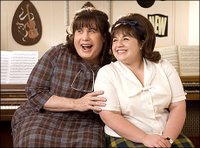
In 1988, John Waters--a cinematic genius, and a queer--made this incredibly entertaining movie that was actually about bringing people together, about moving society foreward, using the integration of a popular television dance show as the backdrop. Then in 2002, a musical version of the film opened on Broadway to critical and audience acclaim. The musical starred Harvey Fierstein (a queer,) with music and lyrics by Marc Shaiman and Scott Whittman (queers who are married to each other and who proclaimed their love for each other and even kissed on the Tonys.) The whole thing is just crawling with gay from beginning to end.
And the musical was about being who you are, to the fullest extent, your race, your class, your size, your sexuality, embracing the whole of everyone. It filled the theeater with love over and over again. It was sheer joy. And now we have Travolta, who I refer to as John Trevolting, playing the role of Edna Turnblad--and he's one of the most closeted people in the history of history. The whole thing makes me want to puke.
I've looked throught he IMDB message boards and Googled the hell out of it, but I'm not sure why Harvey's not in the film. He's an icon, a supreme talent. He's got four Tony Awards in four categories from only four nominations. He's a hero. Oh, and he's out.
So here's this other picture, which appeared in the Enquirer about a month ago, just because I can.
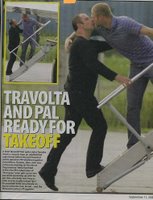

In 1988, John Waters--a cinematic genius, and a queer--made this incredibly entertaining movie that was actually about bringing people together, about moving society foreward, using the integration of a popular television dance show as the backdrop. Then in 2002, a musical version of the film opened on Broadway to critical and audience acclaim. The musical starred Harvey Fierstein (a queer,) with music and lyrics by Marc Shaiman and Scott Whittman (queers who are married to each other and who proclaimed their love for each other and even kissed on the Tonys.) The whole thing is just crawling with gay from beginning to end.
And the musical was about being who you are, to the fullest extent, your race, your class, your size, your sexuality, embracing the whole of everyone. It filled the theeater with love over and over again. It was sheer joy. And now we have Travolta, who I refer to as John Trevolting, playing the role of Edna Turnblad--and he's one of the most closeted people in the history of history. The whole thing makes me want to puke.
I've looked throught he IMDB message boards and Googled the hell out of it, but I'm not sure why Harvey's not in the film. He's an icon, a supreme talent. He's got four Tony Awards in four categories from only four nominations. He's a hero. Oh, and he's out.
So here's this other picture, which appeared in the Enquirer about a month ago, just because I can.

Tuesday, September 12, 2006
The Ruins
I want to write a bit about Scott Smith's new novel, The Ruins, which--according to dopey reviewers on Amazon.com--isn't particularly worth reading. Totally unbelieveable, they cry. Not scary! Not scary enough! But they're wrong. The novel is dark, brutal, almost without any hope. It is merciless.
What I keep reading in one inane review after another--except they aren't reviews at all, but really a few sentences about what the reader thought the book should have been like--is that the plot is unbelievable. I never understand this arguing with the writer thing--I do it myself, but I also know that I have to back off.
Take a brilliant, sad and redemptive novel like Ian McEwan's Saturday. At one point, the plot begins to turn--the burglary--and I remember distinctly saying to myself: Stop! I don't want things to go this way! But I'm not the decision maker, I'm just along for the ride. I have enough respect for McEwan to go with him where he wants to take me. Because one thing always leads to another, and sometimes the only way through is the unpleasant way through. And good writers know this.
How did the democratization of reviewing turn into readers not trusting writers?
It frustrates me--well, it pisses me off--that people look for novels to be so true to life. I think the main tragedy is that people--the general Amazon reviewing public--thought they were going to be eating popcorn and soda pop, but what they got was richer and meatier, bitter and difficult to digest. And they felt cheated.
But that's what I want from art--I want to be surprised. I want to be put somewhere else, somewhere outside of my regular existence, where the colors are a bit more saturated, the characters a bit smarter, or not smarter, and the flowers just too red to be true. I think of Toni Morrison saying that she didn't want her novels to be books you dipped into for fifteen minutes before bed. You know, if you want a slice of life, look out the fucking window.
What I keep reading in one inane review after another--except they aren't reviews at all, but really a few sentences about what the reader thought the book should have been like--is that the plot is unbelievable. I never understand this arguing with the writer thing--I do it myself, but I also know that I have to back off.
Take a brilliant, sad and redemptive novel like Ian McEwan's Saturday. At one point, the plot begins to turn--the burglary--and I remember distinctly saying to myself: Stop! I don't want things to go this way! But I'm not the decision maker, I'm just along for the ride. I have enough respect for McEwan to go with him where he wants to take me. Because one thing always leads to another, and sometimes the only way through is the unpleasant way through. And good writers know this.
How did the democratization of reviewing turn into readers not trusting writers?
It frustrates me--well, it pisses me off--that people look for novels to be so true to life. I think the main tragedy is that people--the general Amazon reviewing public--thought they were going to be eating popcorn and soda pop, but what they got was richer and meatier, bitter and difficult to digest. And they felt cheated.
But that's what I want from art--I want to be surprised. I want to be put somewhere else, somewhere outside of my regular existence, where the colors are a bit more saturated, the characters a bit smarter, or not smarter, and the flowers just too red to be true. I think of Toni Morrison saying that she didn't want her novels to be books you dipped into for fifteen minutes before bed. You know, if you want a slice of life, look out the fucking window.
Monday, July 31, 2006
Political Bullshit
On July 25, 2006, New York State Democratic gubernatorial candidates, Tom Suozzi and Eliot Spitzer, participated in a televised debate held at the Schimmel Theater at Pace University. In his opening introduction, moderator Dominic Carter, explained that during the latter part of the hour-long debate, "we will end...with a series of lightning round questions where the candidates can only answer yes or no to the questions that I will ask them."
The audience, both at the Schimmel Theater and at home, would therefore be treated to the simplest of answers when it came to difficult questions. There would be no fuzzy unclear babbling on, no talking around an issue. The audience would accept only the most direct of answers.
On the contrary.
Take this exchange during the "lightning round," with Carter, the questioner, putting a rather complicated issue in front of Suozzi:
The audience awaited an answer. Suozzi was essentially given two options. The first, the more rational, would be to admit that it would be a huge, near-impossible feat to provide universal health care to the state of New York, and that the least he could do would be to attempt, given the limitations of his power as governor, to implement such a system. Or, he could take the easy way out, the "political" way out, and answer that yes, he would succeed in providing universal health care.
At this point the audience cheered, roaring in support of Spitzer's positive answer, indicating that what they indeed wanted was to be delivered empty promises by men in suits. What they wanted was some old school political bullshit.
The audience, both at the Schimmel Theater and at home, would therefore be treated to the simplest of answers when it came to difficult questions. There would be no fuzzy unclear babbling on, no talking around an issue. The audience would accept only the most direct of answers.
On the contrary.
Take this exchange during the "lightning round," with Carter, the questioner, putting a rather complicated issue in front of Suozzi:
Q. Mr. Suozzi, can you achieve universal health care in the state — again, universal health care in the state — if you are elected governor?
SUOZZI. You want a yet or no for that?
Q. Yes or no.
SUOZZI. I can’t say I’ll try?
Q. Yes or no.
SUOZZI. Could I say —
Q. Yes or no.
SUOZZI. Uh —
Q. Yes or no, Mr. Suozzi.
The audience awaited an answer. Suozzi was essentially given two options. The first, the more rational, would be to admit that it would be a huge, near-impossible feat to provide universal health care to the state of New York, and that the least he could do would be to attempt, given the limitations of his power as governor, to implement such a system. Or, he could take the easy way out, the "political" way out, and answer that yes, he would succeed in providing universal health care.
SUOZZI. I’ll try. I can’t answer that.
Q. Yes or no, Mr. Suozzi.
SUOZZI. No.
Q. Mr. Spitzer?
SPITZER. Yes.
At this point the audience cheered, roaring in support of Spitzer's positive answer, indicating that what they indeed wanted was to be delivered empty promises by men in suits. What they wanted was some old school political bullshit.
Thursday, June 08, 2006
Strange Things You Find in the Employment Pages
-Do you know that you are physically attractive?
-Must motivate a staff that is already motivated.
-Put your exuberance to excellent use!
-50+ years experience required.
-Position requires excellent phone manners when answering the phone.
-You will be required to give out liquor samples.
-Strong Oral Skills a must.
-Must motivate a staff that is already motivated.
-Put your exuberance to excellent use!
-50+ years experience required.
-Position requires excellent phone manners when answering the phone.
-You will be required to give out liquor samples.
-Strong Oral Skills a must.
Wednesday, May 31, 2006
They Did What?
They made a record of remixes of Gustavo Santaolalla's theme "The Wings" from Brokeback Mountain. Apparently, the gays needed a 10-minute club mix. Actually, they needed five of them. When I heard about the record, I immediately thought it was some SNL joke which got out of hand. But no, here it is:
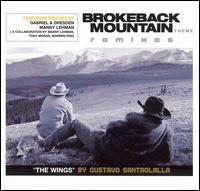
I can't help but imagine that the same people who have written this in response to the majority of negative reviews on iTunes--"Now you naysayers, PLEASE STAY HOME AND DO NOT GET YOUR CHUBBY BODIES ANYWHERE NEAR A DANCEFLOOR"--are the same people who, when I saw the movie, laughed out loud when the actors got either intimate, or even vaguely naked. When I hear gay men talk about Brokeback, I still wonder if they saw the same movie that I did.
I guess if we want to dance the night away to an anthem of homophobia, lost love and self-hatred--which is what Brokeback Mountain is really about--then here we have several to choose from. I listened to the remixes; they seem to have left out that part where Jack Twist gets beaten to death with a tire iron, and Ennis del Mar gets to live the rest of his life wondering what could have been different.
And as for not getting my chubby body anywhere near a dancefloor, let me only say this: You have nothing to worry about.

I can't help but imagine that the same people who have written this in response to the majority of negative reviews on iTunes--"Now you naysayers, PLEASE STAY HOME AND DO NOT GET YOUR CHUBBY BODIES ANYWHERE NEAR A DANCEFLOOR"--are the same people who, when I saw the movie, laughed out loud when the actors got either intimate, or even vaguely naked. When I hear gay men talk about Brokeback, I still wonder if they saw the same movie that I did.
I guess if we want to dance the night away to an anthem of homophobia, lost love and self-hatred--which is what Brokeback Mountain is really about--then here we have several to choose from. I listened to the remixes; they seem to have left out that part where Jack Twist gets beaten to death with a tire iron, and Ennis del Mar gets to live the rest of his life wondering what could have been different.
And as for not getting my chubby body anywhere near a dancefloor, let me only say this: You have nothing to worry about.
Friday, May 19, 2006
Go For It, Teenagers!
A recent study conducted by Janet Rosenbaum of the Harvard School of Public Health and appearing in the American Journal of Public Health resulted in many interesting findings, and naturally, even more interesting implications. The study surrounded "virginity pledges" in general. You know, those things where you vow not to have sexual intercourse until marriage...yeah, those.* Officially, the study described them as "a public or written pledge to remain a virgin until marriage."
The first thing they discovered was that the majority of the teenagers recanted their pledge within the first year. And those who were at one time sexually active and later took the pledge, were more likely to lie about their past sexual histories. And 73% of the ones who did have sex during their virginal tenure later lied about having pledged entirely.
However, the craziest thing Ms. Rosenbaum discovered was that the teenagers who had sex then refused to acknowledge it because of the new pledge actually believed that their new sexual history (read: we're virgins again!) was true...thereby grossly underestimating their risk for STDs. And anyway, all the girls I knew in high school that who were trying to preserve their virginity were still having oral and anal sex. Plenty of it.
Ms. Rosenbaum also wrote: "It's very tempting to craft stories about what may have been going on in these adolescents' minds as they changed their recollections, but [the] survey data doesn't give us enough information to substantiate the stories."
So, it seems that the teenagers who decided that being a good God-fearing Christian wasn't exactly the coolest thing to be were, like, totally kidding about all that lame virgin stuff.
*(I remember when these first came around my high school. I looked at the paper and saw intercourse and marriage and thought "well, none of this applies to me.")
The first thing they discovered was that the majority of the teenagers recanted their pledge within the first year. And those who were at one time sexually active and later took the pledge, were more likely to lie about their past sexual histories. And 73% of the ones who did have sex during their virginal tenure later lied about having pledged entirely.
However, the craziest thing Ms. Rosenbaum discovered was that the teenagers who had sex then refused to acknowledge it because of the new pledge actually believed that their new sexual history (read: we're virgins again!) was true...thereby grossly underestimating their risk for STDs. And anyway, all the girls I knew in high school that who were trying to preserve their virginity were still having oral and anal sex. Plenty of it.
Ms. Rosenbaum also wrote: "It's very tempting to craft stories about what may have been going on in these adolescents' minds as they changed their recollections, but [the] survey data doesn't give us enough information to substantiate the stories."
So, it seems that the teenagers who decided that being a good God-fearing Christian wasn't exactly the coolest thing to be were, like, totally kidding about all that lame virgin stuff.
*(I remember when these first came around my high school. I looked at the paper and saw intercourse and marriage and thought "well, none of this applies to me.")
Friday, May 05, 2006
Velveeta, ahoy
Dr. Marcella Meyer, a Kraft Foods shareholder, recently proposed that Kraft withdraw their sponsorshop of the 2006 Gay Games VII, in addition to any other activity which supports the homosexual lifestyle. The proposal was rejected by 99 percent of the company's shareholders, according to AdAge.com
Dr. Marcella's bizarre logic stated that Kraft would be legally liable if the participants and attendees "experiment with homosexual encounters and later develop a series, even fatal, illness." Read: When they come here and give each other AIDS, we want to be as far away as possible.
Marc Firestone, who is the executive VP-corporate counsel and also corporate secretary for Kraft, sent a memo to employees last May underscoring their support of the Gay Games--and subsequently, of gay people, unlike Dr. Marcella. The memo read, "Diversity makes us a stronger company and connects us with the diversity that exists among the consumers who buy our products."
So, two things. First, call Kraft Foods (800-323-0768) and tell them that you support their stand on the Gay Games....haven't they heard enough from the right-wing idiots? And then run out to the store and stock up on Velveeta, which you know you want to do.
Dr. Marcella's bizarre logic stated that Kraft would be legally liable if the participants and attendees "experiment with homosexual encounters and later develop a series, even fatal, illness." Read: When they come here and give each other AIDS, we want to be as far away as possible.
Marc Firestone, who is the executive VP-corporate counsel and also corporate secretary for Kraft, sent a memo to employees last May underscoring their support of the Gay Games--and subsequently, of gay people, unlike Dr. Marcella. The memo read, "Diversity makes us a stronger company and connects us with the diversity that exists among the consumers who buy our products."
So, two things. First, call Kraft Foods (800-323-0768) and tell them that you support their stand on the Gay Games....haven't they heard enough from the right-wing idiots? And then run out to the store and stock up on Velveeta, which you know you want to do.
Subscribe to:
Posts (Atom)